Verb Tenses
Explore the past, present, and future! Learn how to use English verb tenses.
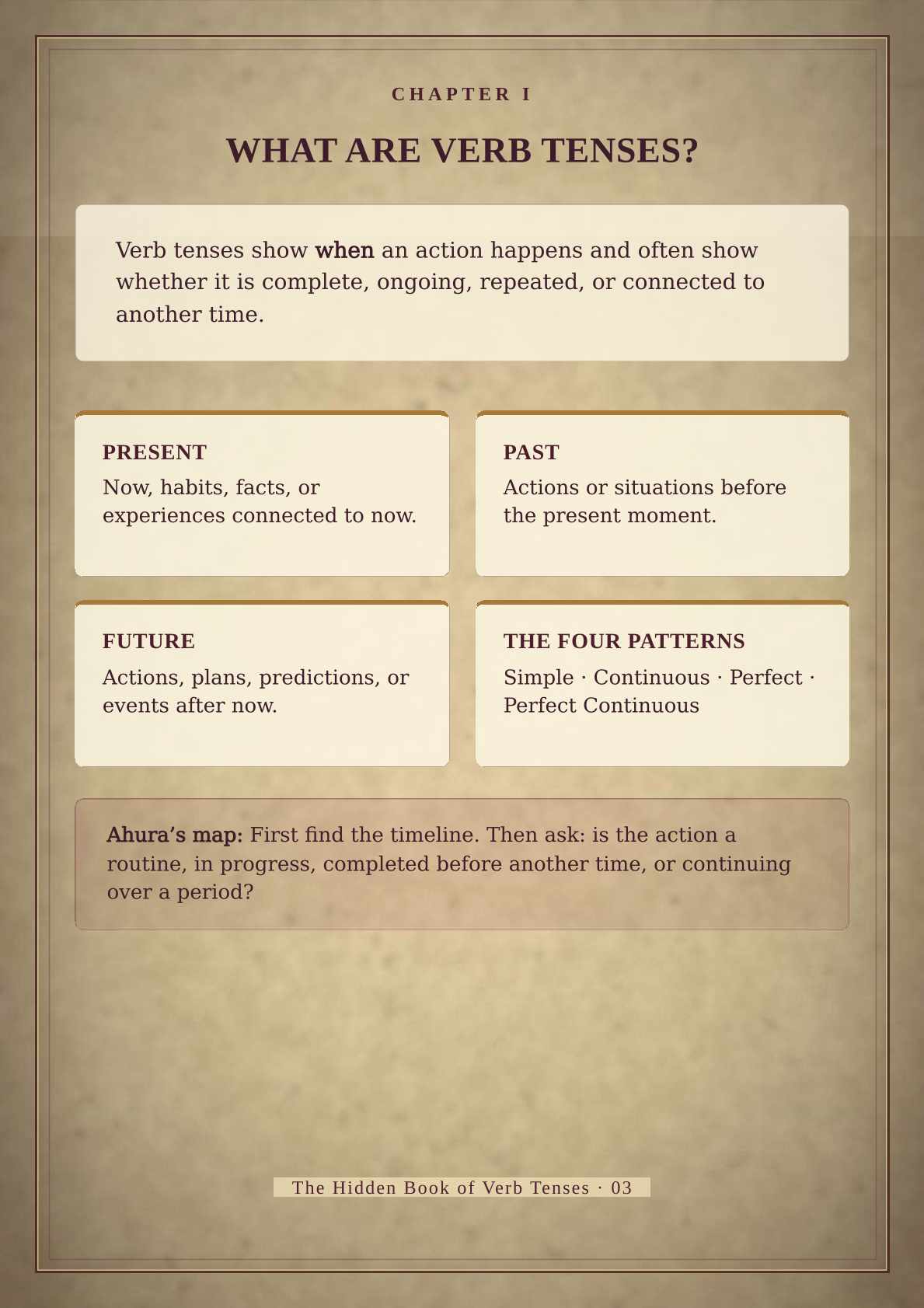
Verb tenses in English are fundamental for building sentences correctly and expressing ideas with precision. In this guide, we will explore the different verb tenses, starting with the present tenses, then the past, and finally the future.
Ready? Let's go!
PRESENT TENSES
Present tenses are the first we learn, as they allow us to describe ourselves and what surrounds us.
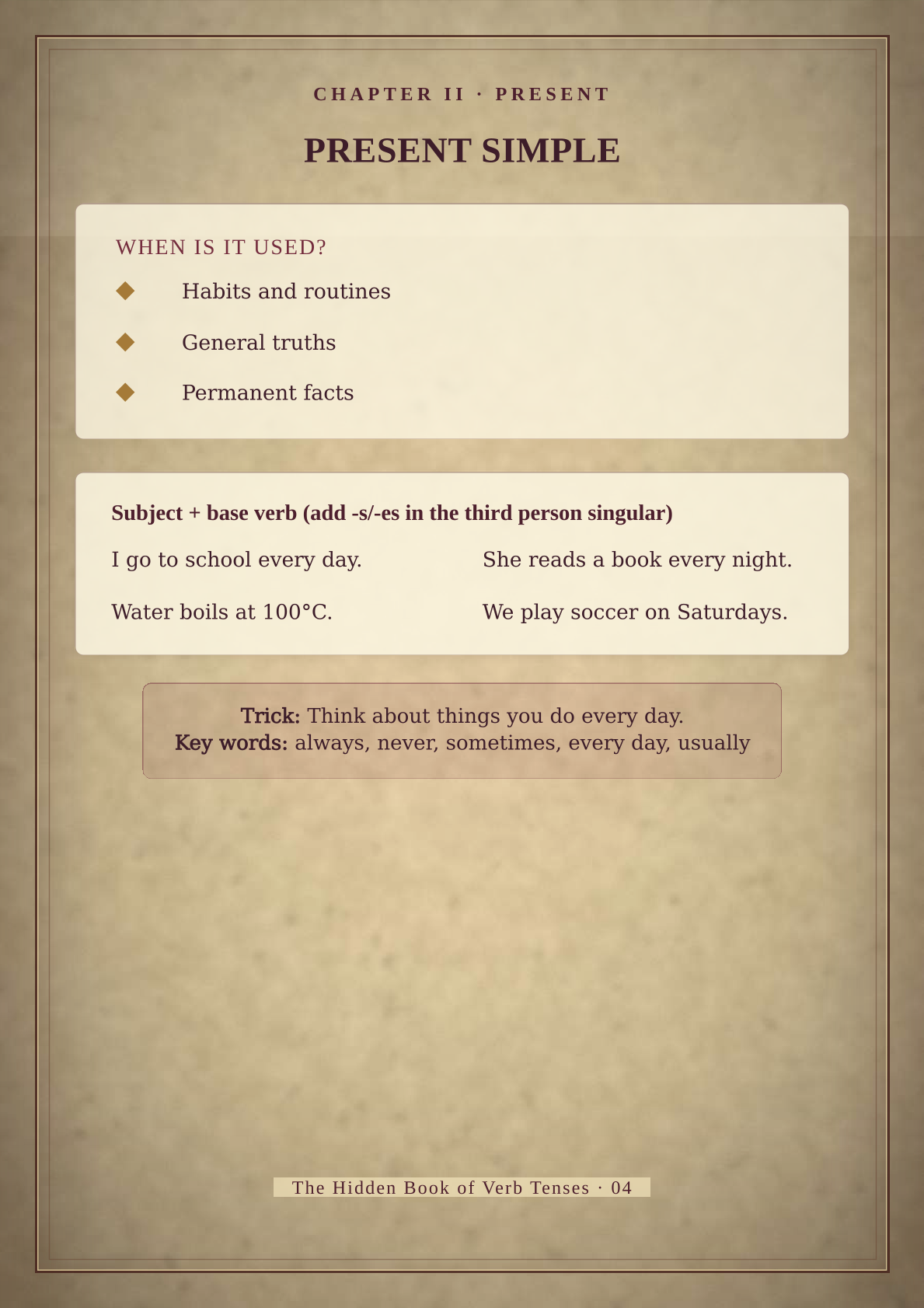
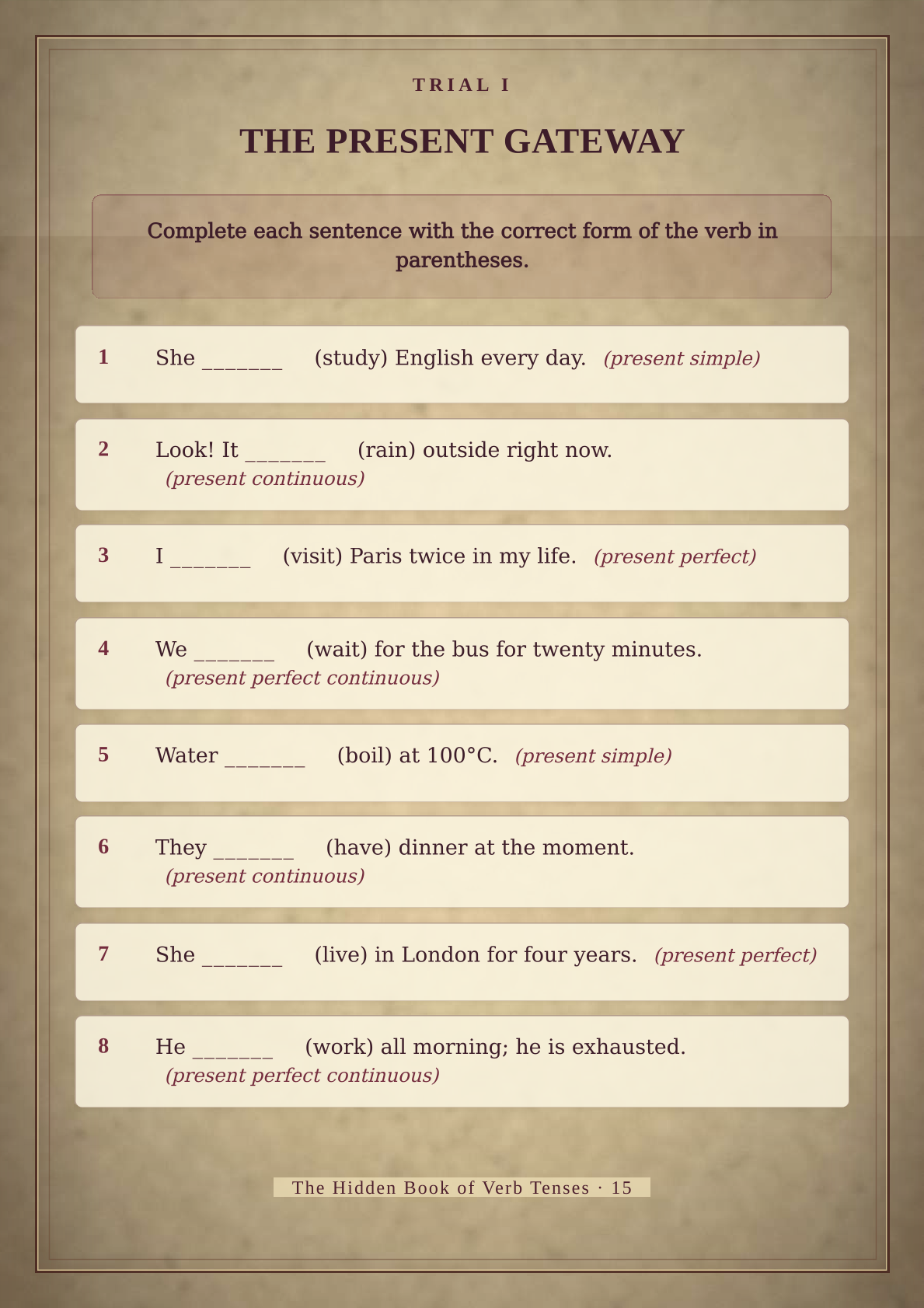
Present Simple
Used to describe generalities and habits.
Subject + verb (+s in 3rd person)
I go to school every day. (Voy al colegio todos los días.)
María goes to school every day. (María va al colegio todos los días.)
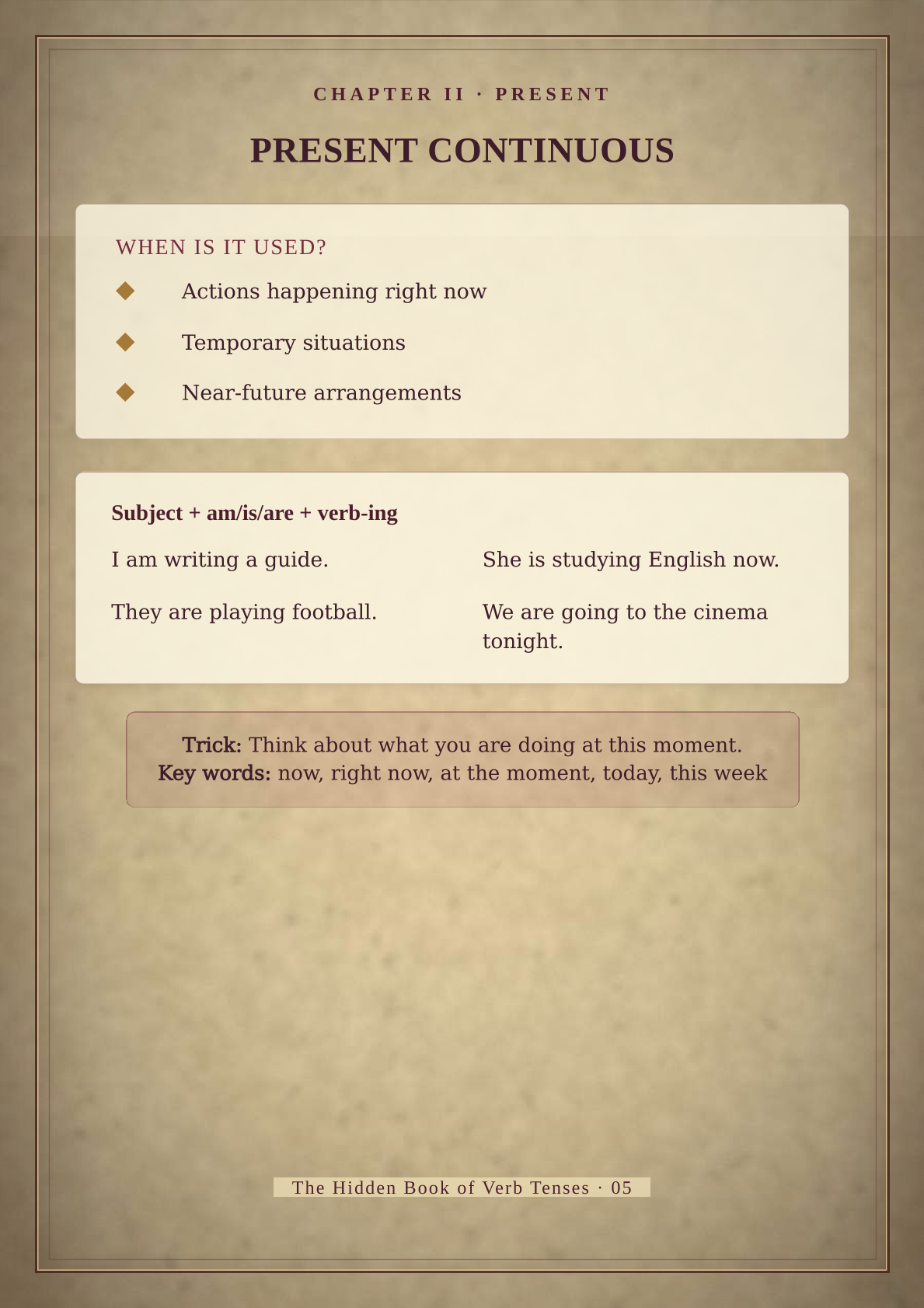
Present Continuous
Used to describe events happening at this very moment.
Subject + to be + verb-ing
I'm writing a verb guide. (Estoy escribiendo una guía de verbos.)
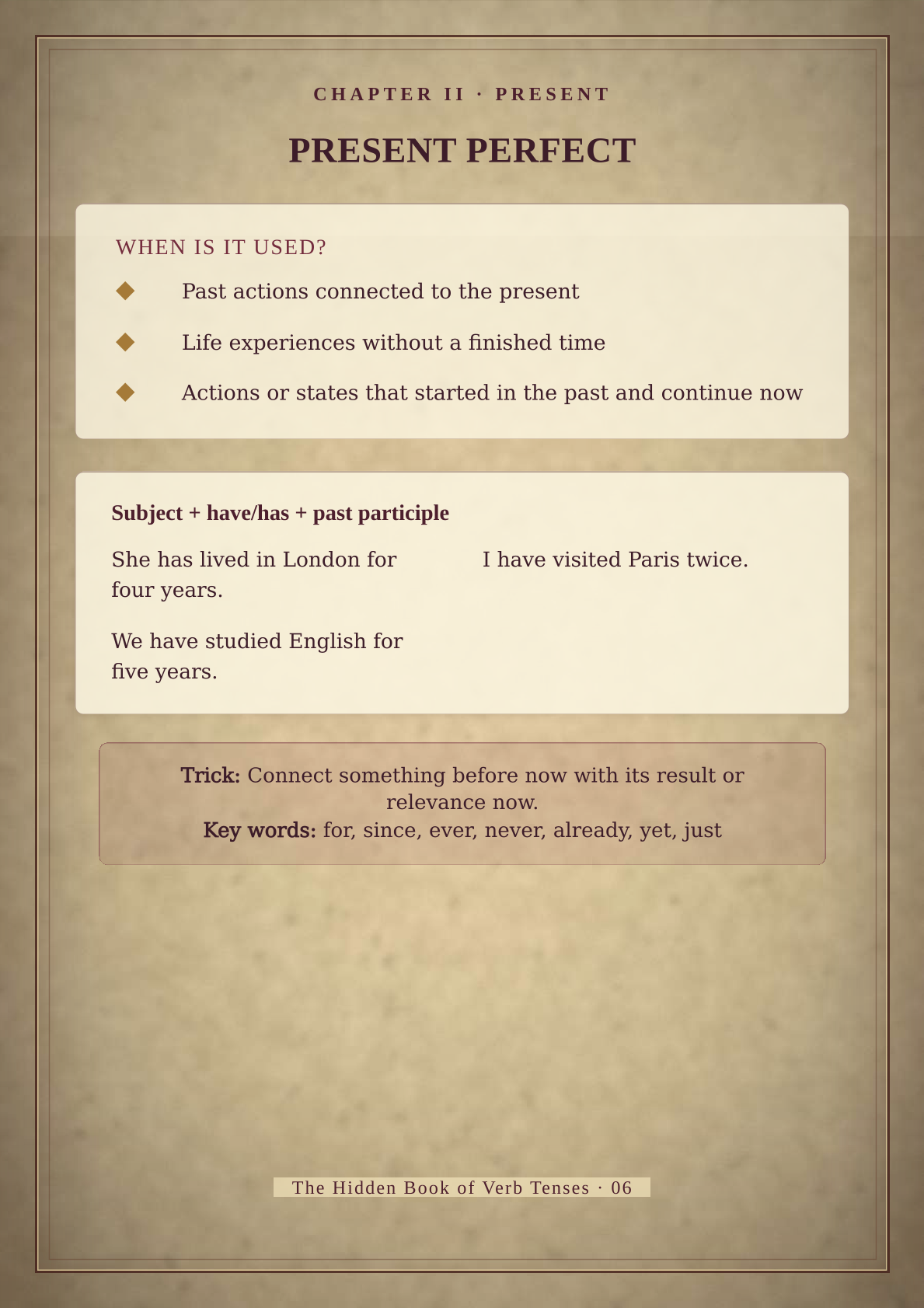
Present Perfect
Refers to past events connected to the present or still having validity.
Subject + have/has + past participle
She has lived in London for 4 years. (Ha vivido en Londres 4 años.)
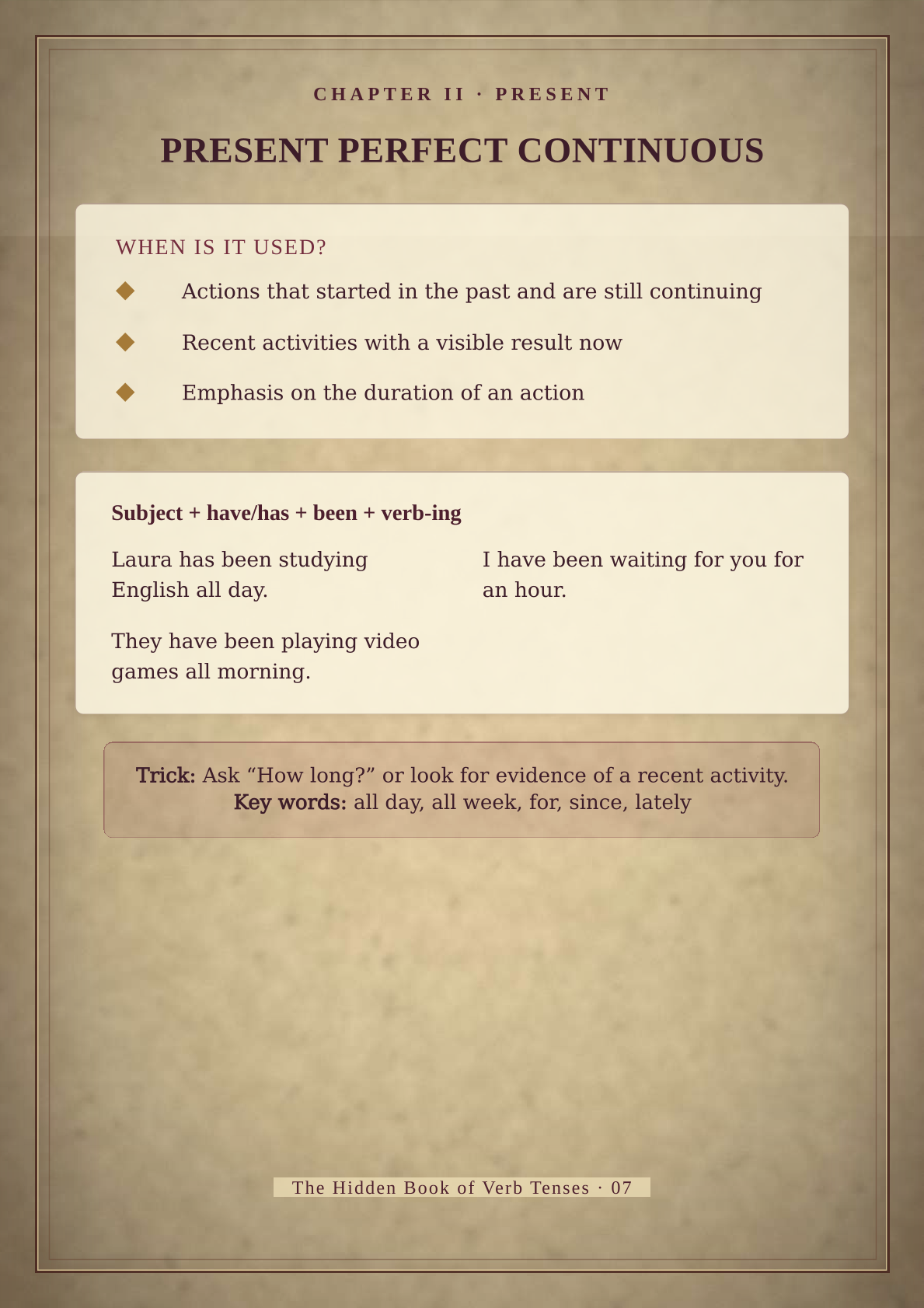
Present Perfect Continuous
Describes an activity performed in the past that has just finished.
Subject + have/has + been + verb-ing
Laura has been studying English all day. (Laura ha estado estudiando inglés todo el día.)
PAST TENSES
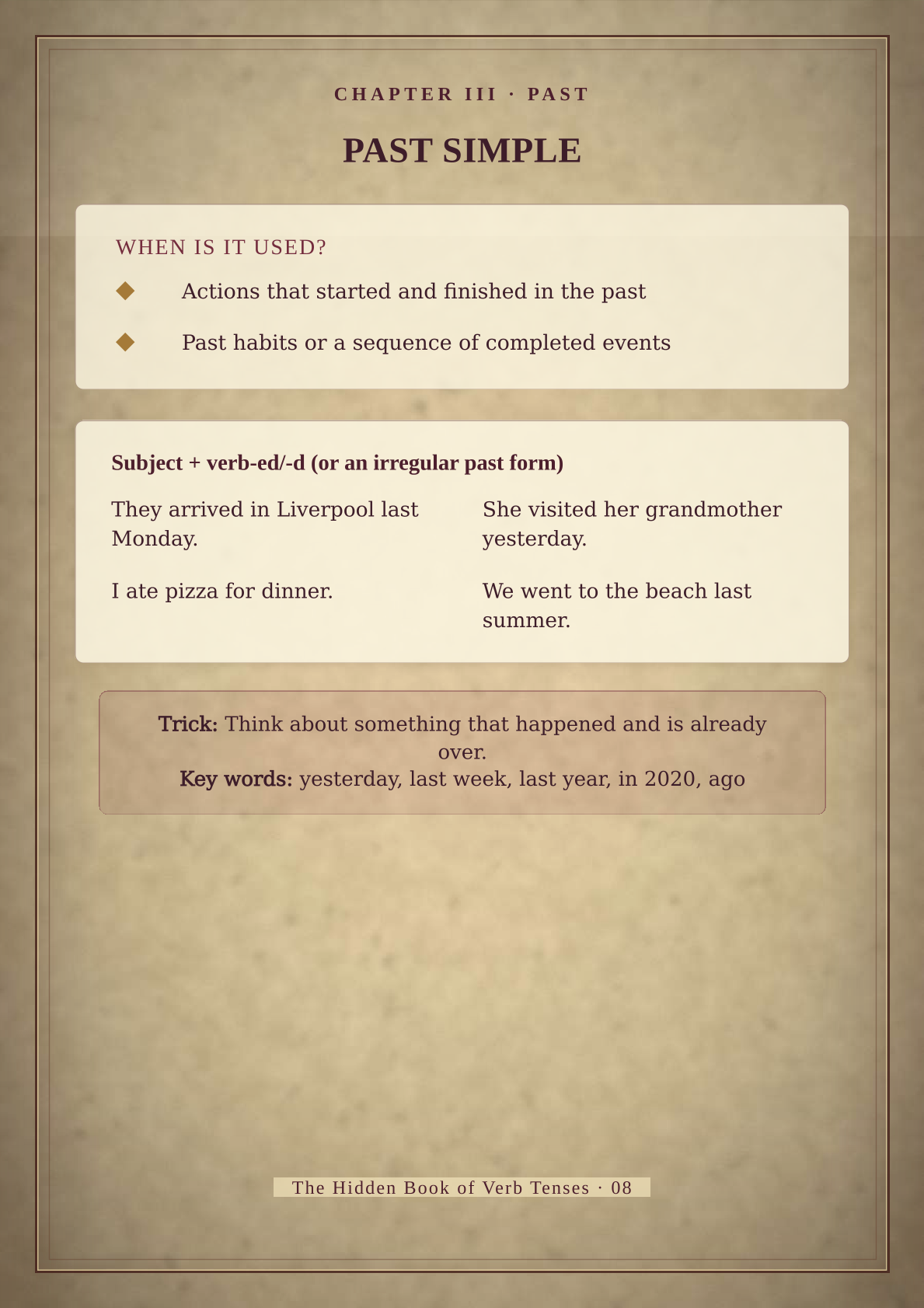
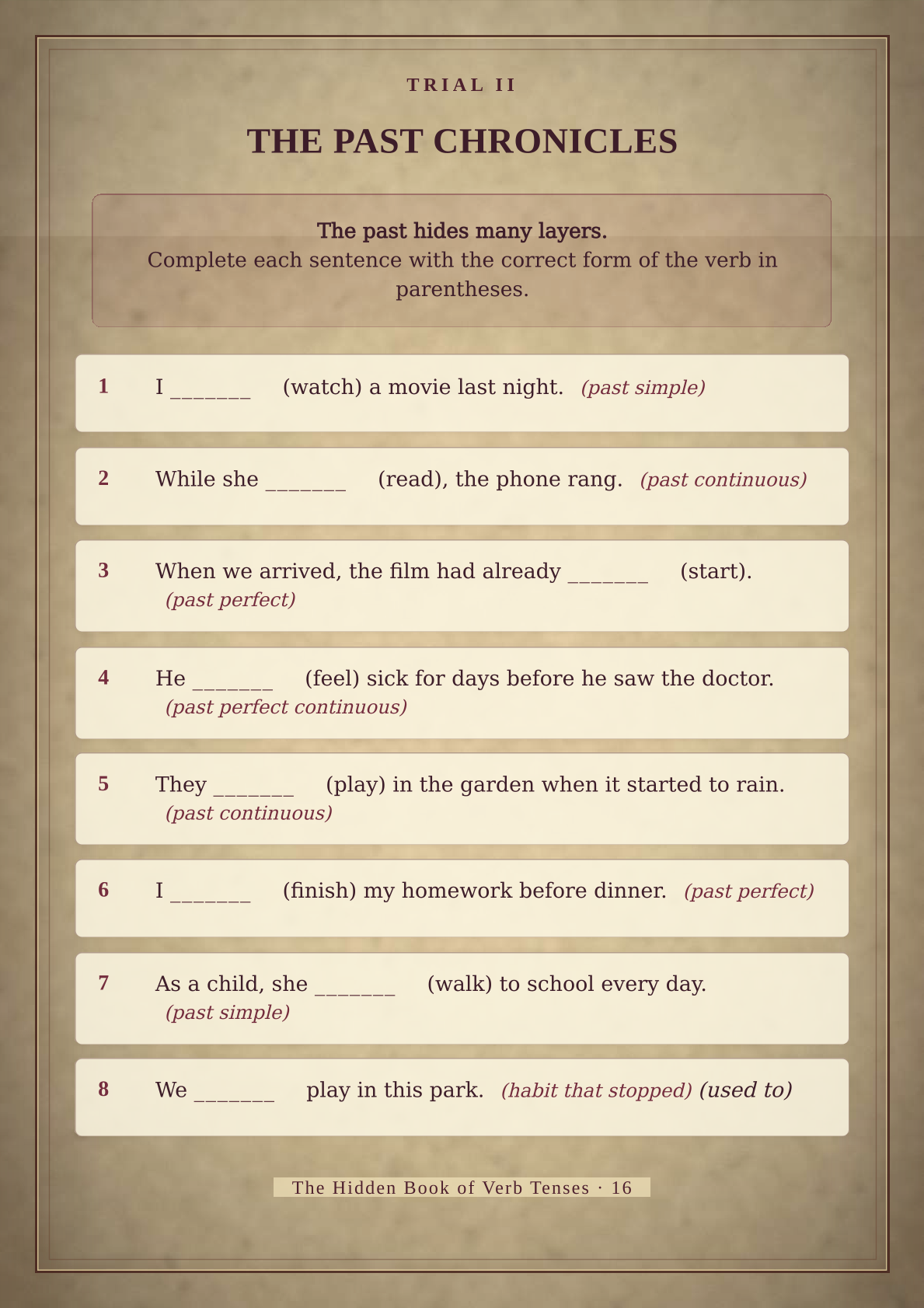
Past Simple
Describes actions that started and ended at a specific moment in the past.
Subject + verb -ed/d
They arrived in Liverpool last Monday. (Llegaron a Liverpool el lunes pasado.)
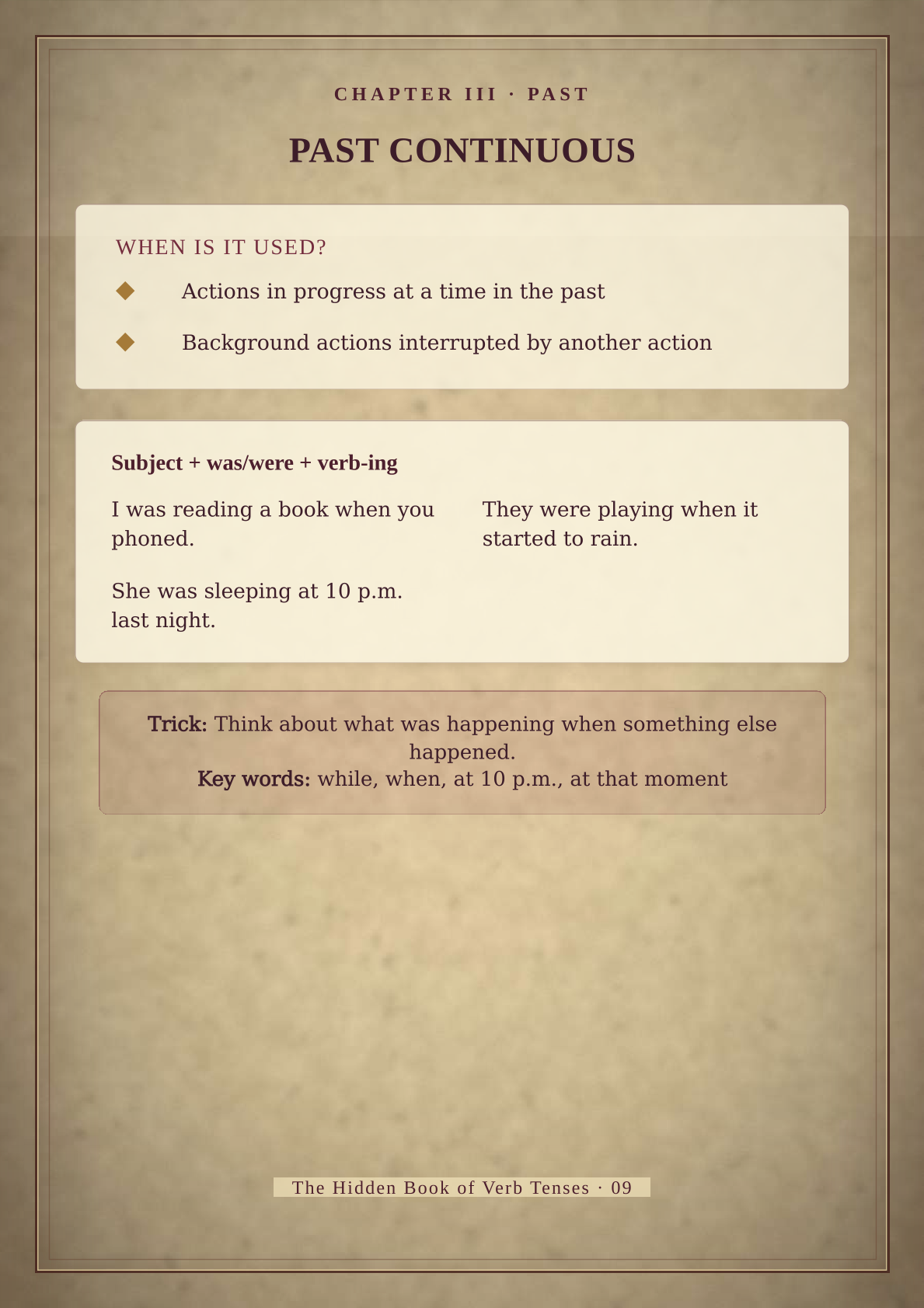
Past Continuous
Describes actions that were being performed in the past but didn't finish or were interrupted.
Subject + was/were + verb-ing
I was reading a book when you phoned. (Estaba leyendo un libro cuando llamaste.)
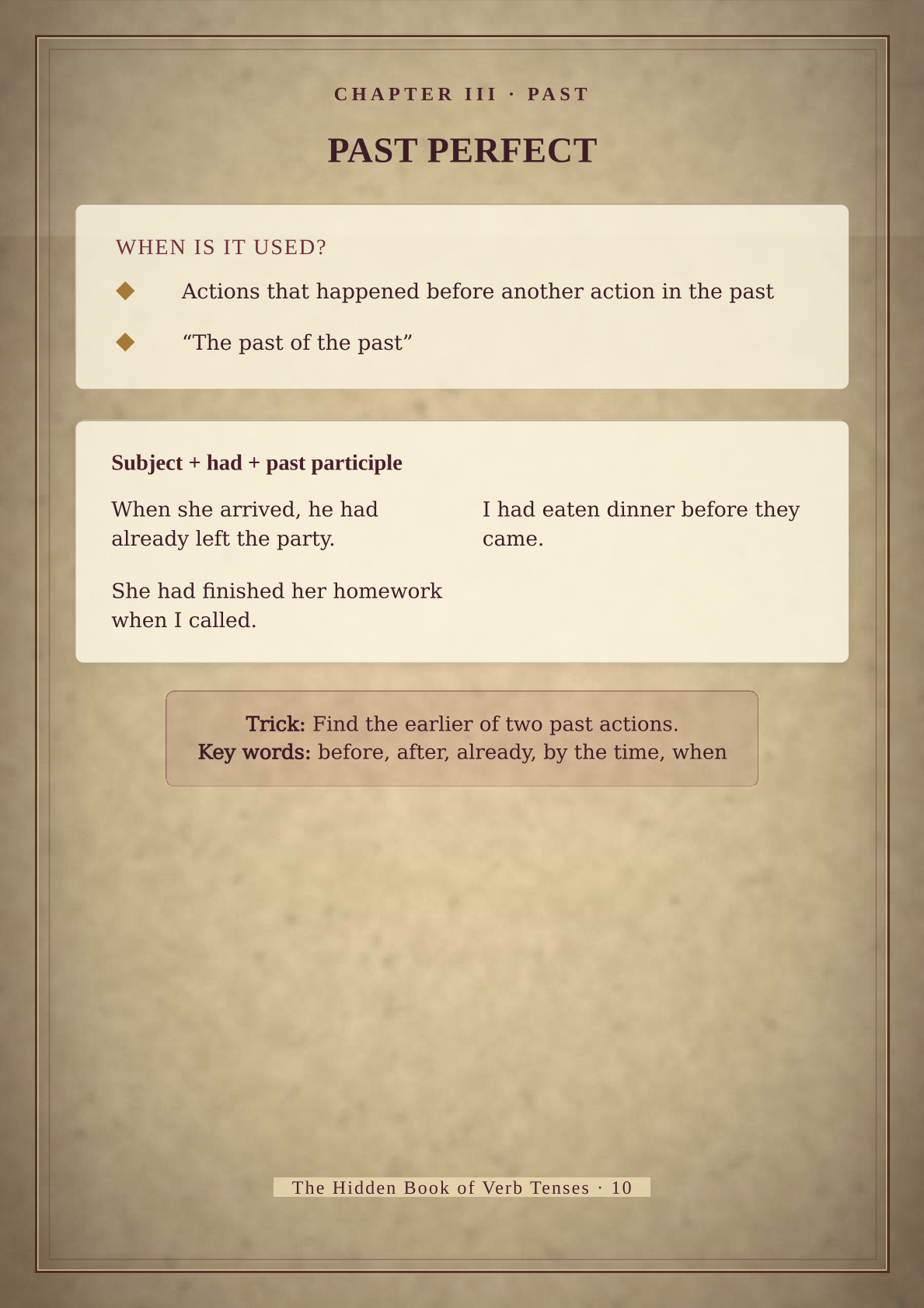
Past Perfect
Describes actions that happened prior to another action in the past we are describing.
Subject + had + past participle
When she arrived, he had already left the party. (Cuando ella llegó, él ya se había marchado...)
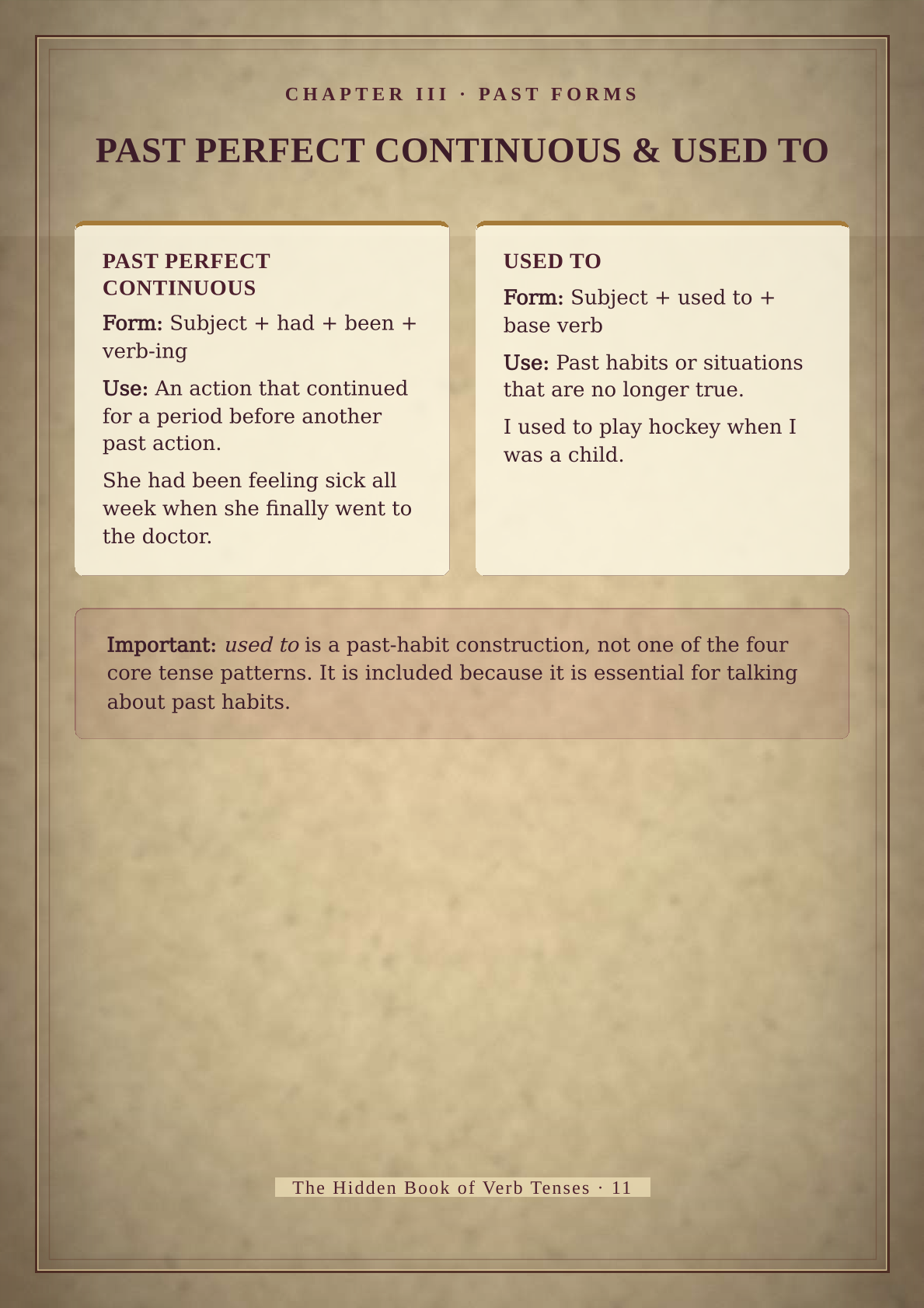
Past Perfect Continuous
Describes actions in process in the past that happened before another action.
Subject + had + been + verb-ing
She had been feeling sick the whole week when she finally went to the doctor. (Estuvo sintiéndose mal toda la semana...)
Used to
Used for actions that used to be done frequently in the past but no longer are.
Subject + used to + infinitive
When I was a child I used to play hockey. (Cuando era pequeño solía jugar al hockey.)
FUTURE TENSES
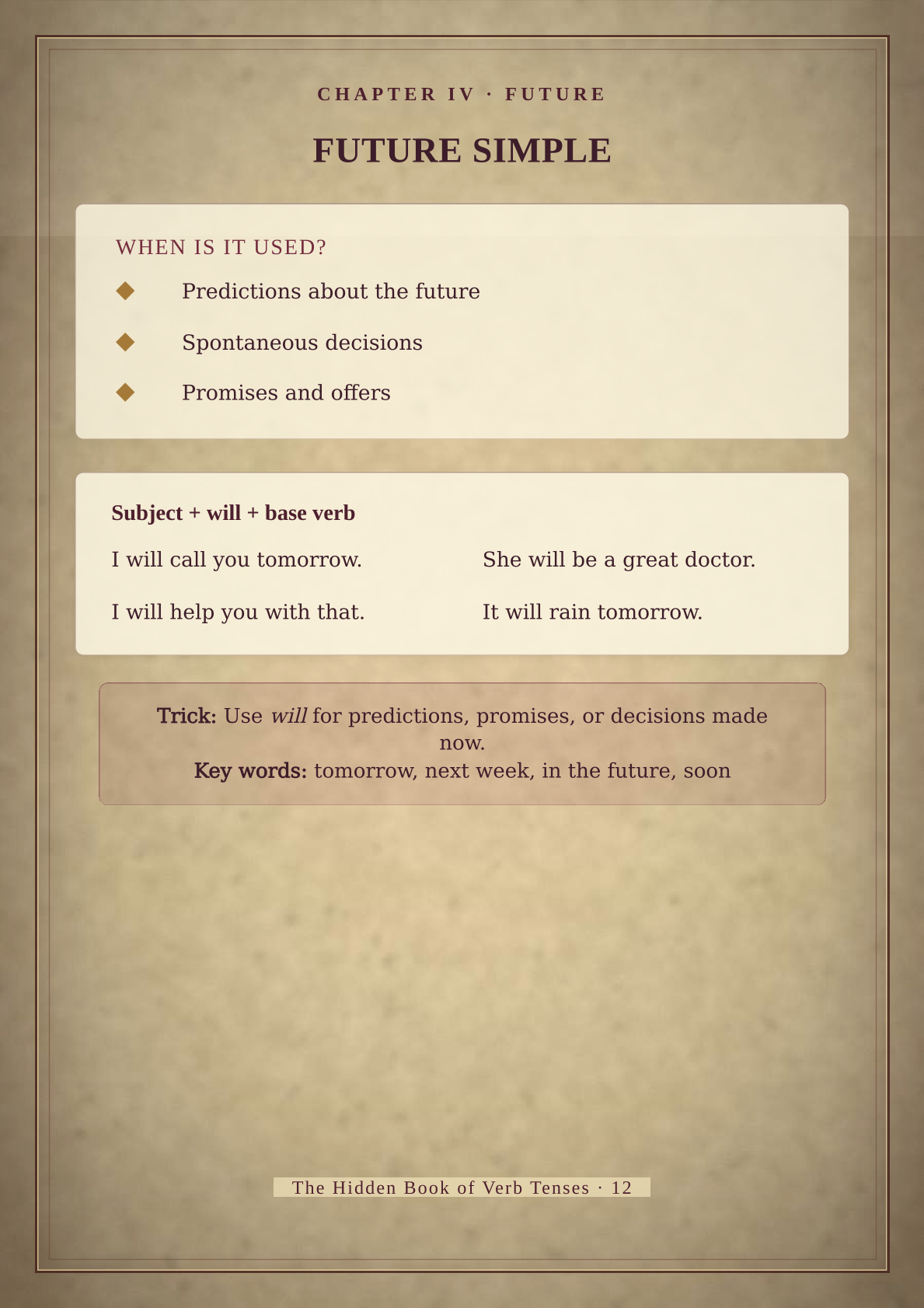
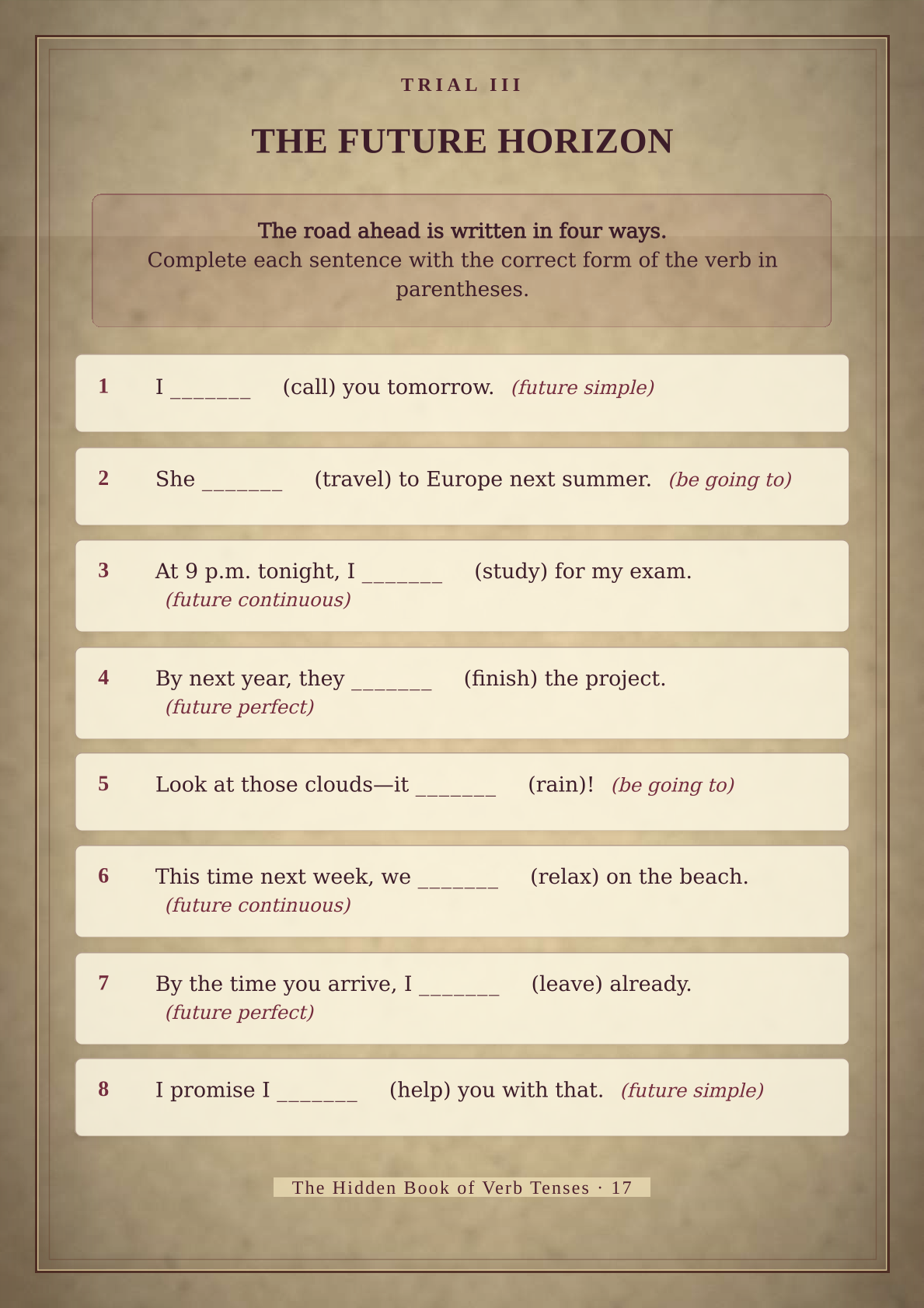
Future Simple
Used to make predictions about the future and establish a fact in the future.
Subject + will + infinitive
Ok, if you insist, I will go to the party on Friday! (¡Iré a la fiesta el viernes!)
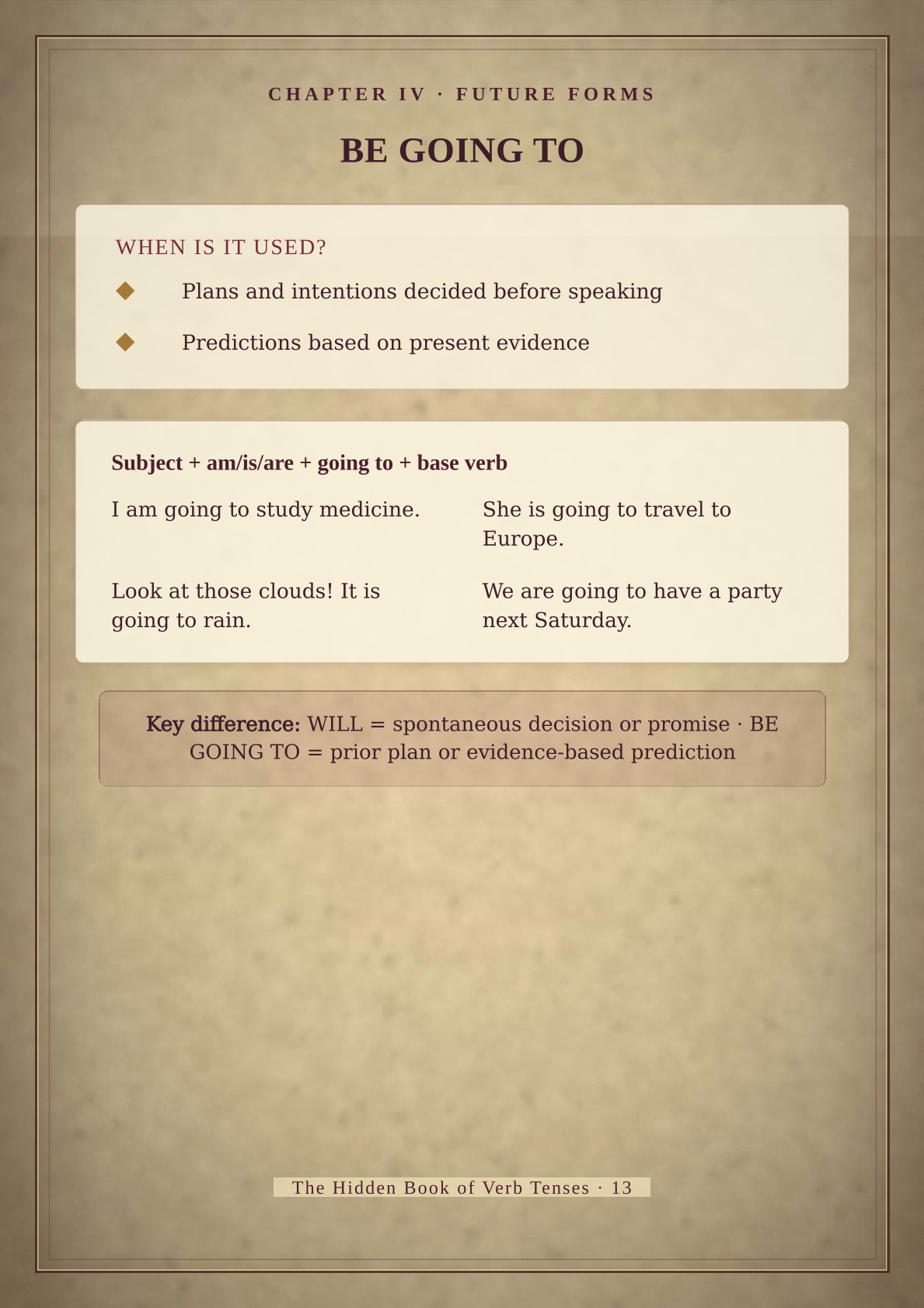
Be Going To
To talk about actions that will surely happen in the very near future.
Subject + to be + going to + infinitive
Look at those clouds, it's going to start raining soon. (Va a empezar a llover enseguida.)
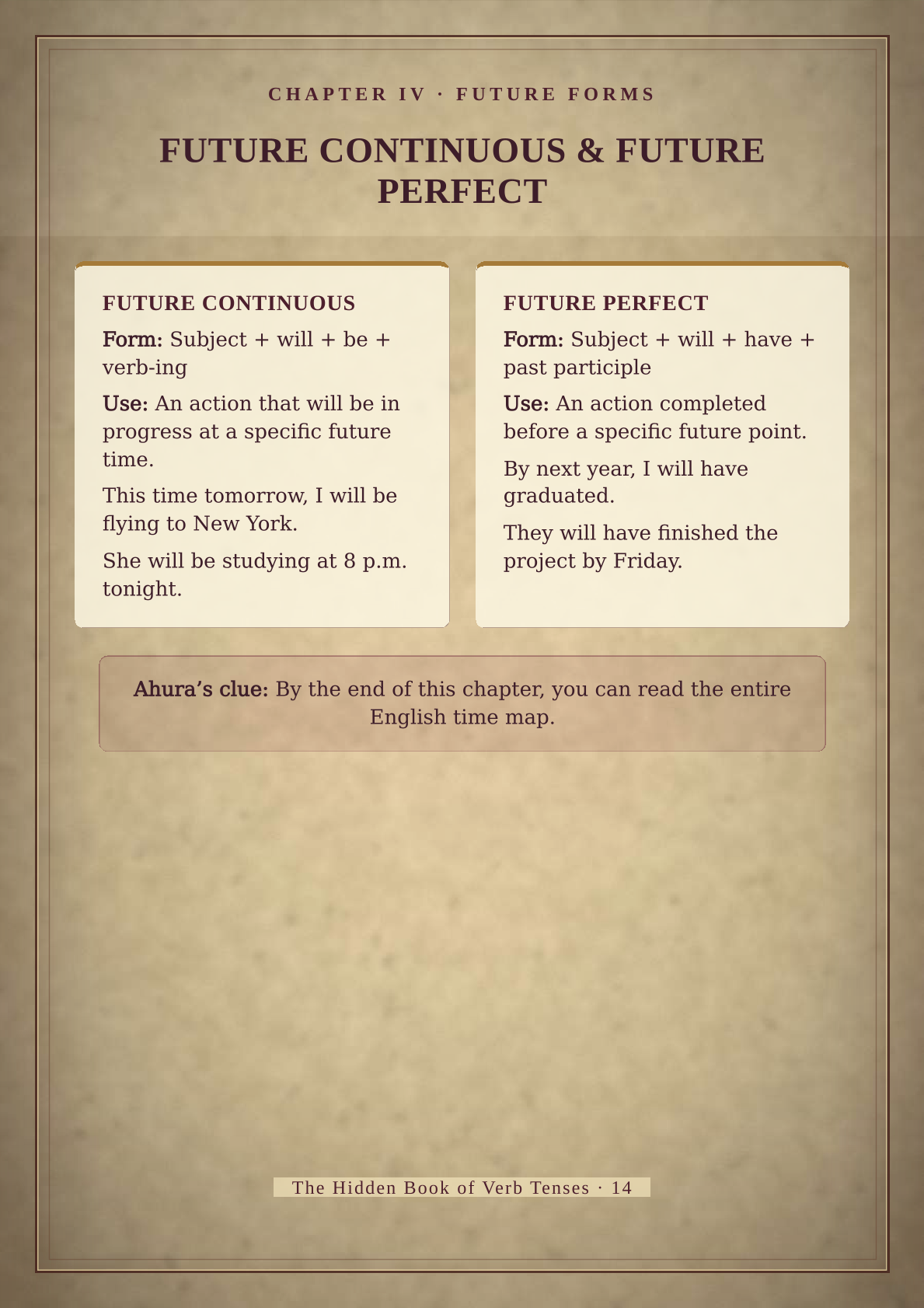
Future Continuous
Describes actions that will be in progress at a specific moment in the future.
Subject + will + be + verb-ing
Tomorrow morning they'll be playing football. (Mañana por la mañana estarán jugando al fútbol.)
Future Perfect
Used to talk about actions that will have finished in the future.
Subject + will + have + past participle
By June, I will have passed the First Certificate Exam. (En junio ya habré aprobado...)
Future Perfect Continuous
Describes unfinished actions or events at some point between the present and the future. Emphasizes duration.
Subject + will + have been + verb-ing
By 2022 I will have been working for this company for 5 years. (En 2022 llevaré trabajando 5 años...)
🎧 Audio Explanation
📖 Interactive Booklet