Modal Verbs
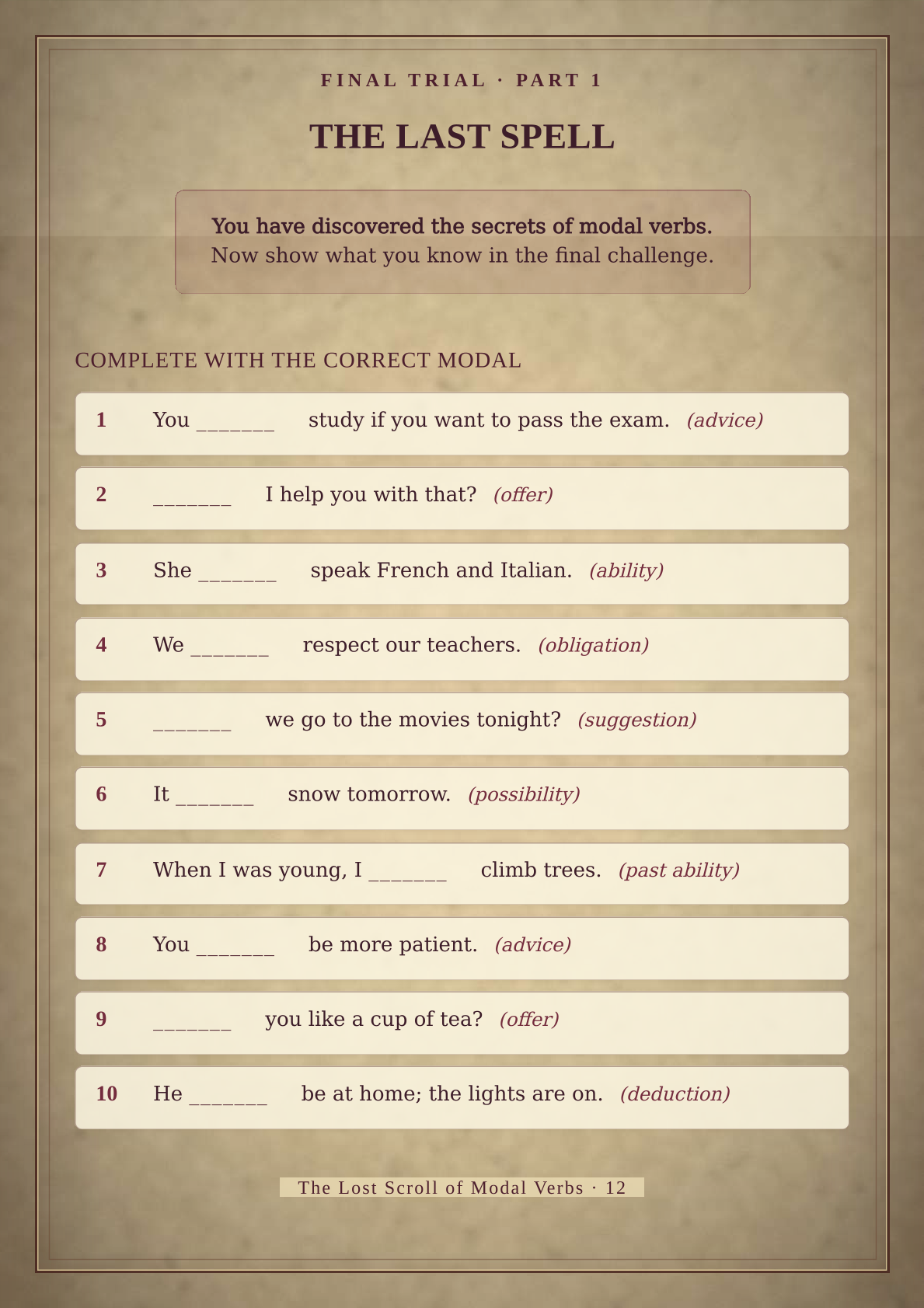
Discover how modal verbs express ability, advice, permission, and possibility.
What are Modal Verbs?
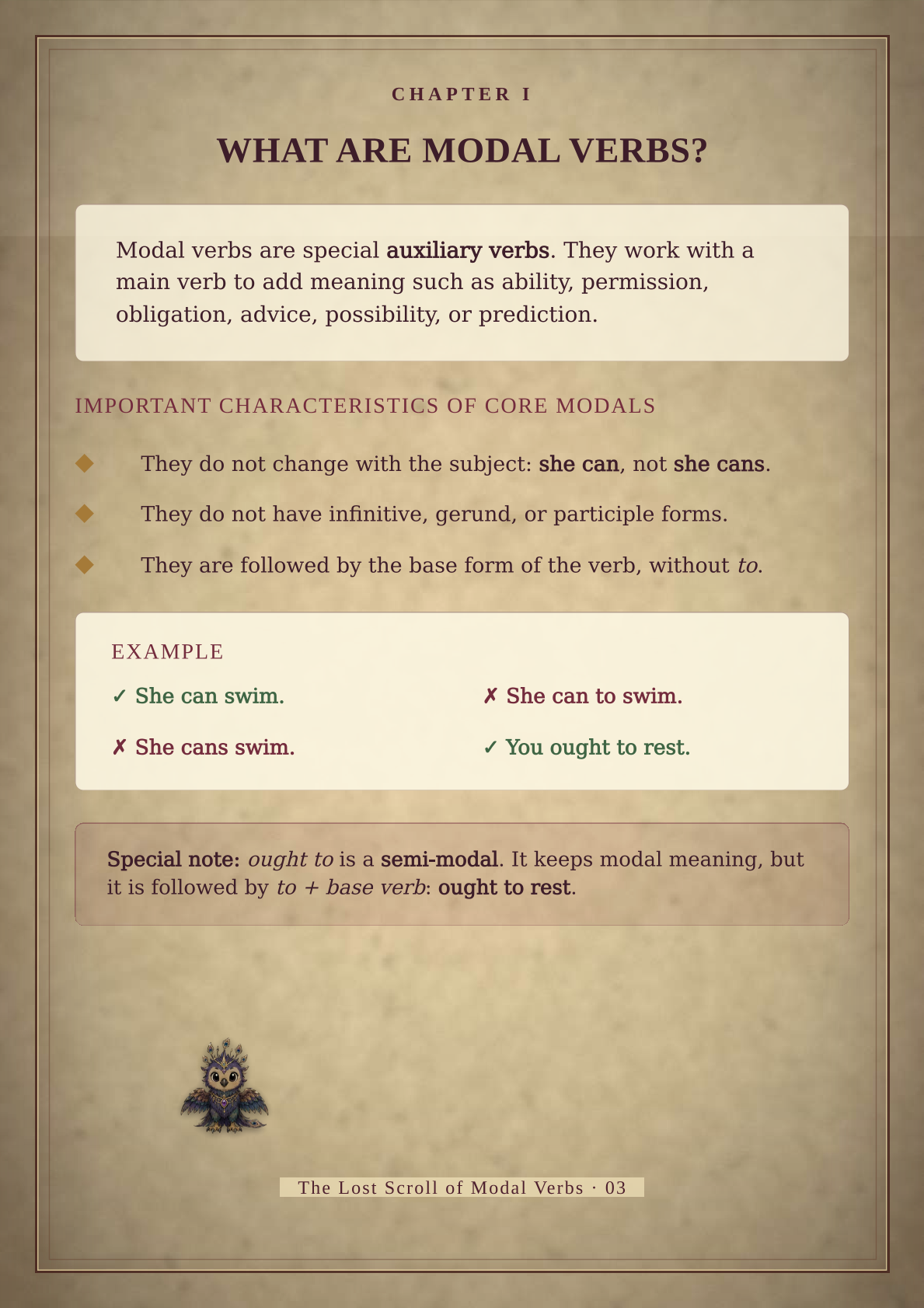
Modal verbs are a type of auxiliary verb, meaning they always accompany a main verb whose meaning they nuance or modify.
What peculiarities do modal verbs have?
- They do not have infinitive, gerund, or participle forms.
- Modal verbs do not change their form when used with the third person singular.
❌ She cans swim.
✅ She can swim.
❌ They are mighting to go.
✅ They might go.
How are they used?
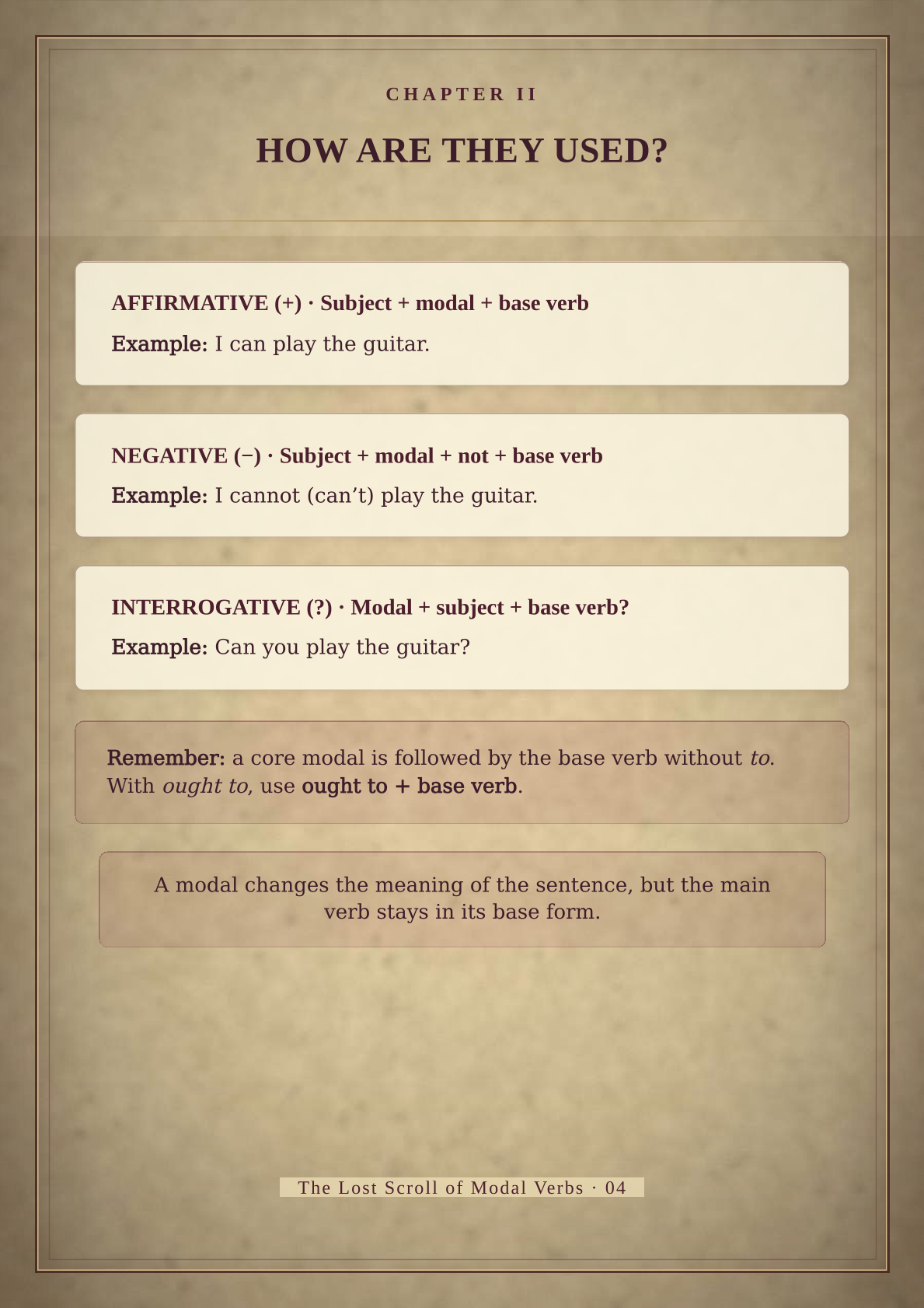
As mentioned above, modal verbs accompany a main verb. They always go in front of a verb to give it more meaning.
Affirmative Structure:
Subject + modal verb + main verb
You should call your mother more often.
Deberías llamar a tu madre más a menudo.
Negative Structure:
Subject + modal verb + not + main verb
He could not / couldn't come earlier.
No pudo venir más temprano.
Interrogative Structure:
Modal verb + subject + main verb
Will you go out tonight?
¿Saldrás esta noche?
The Most Common Modal Verbs
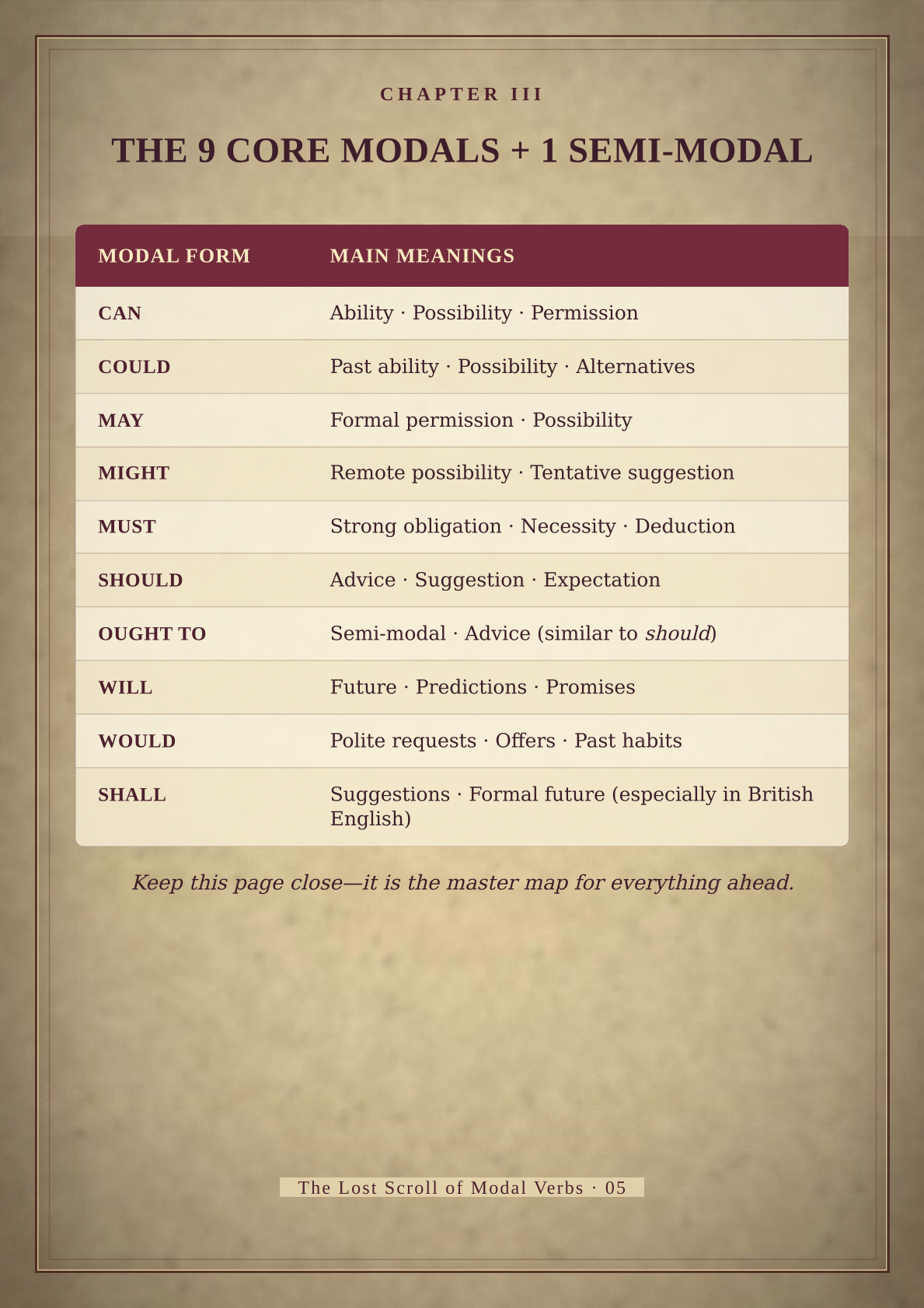
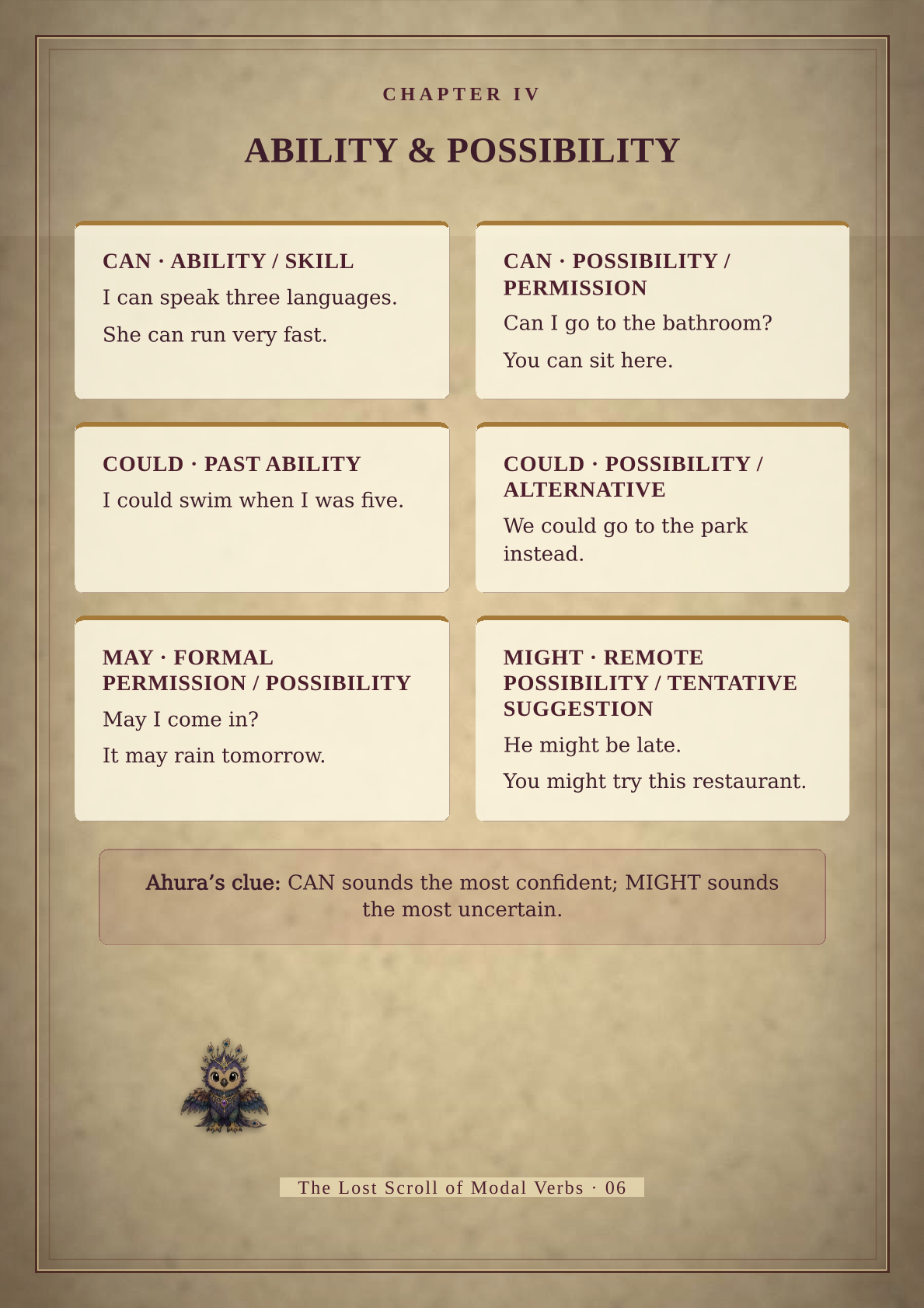
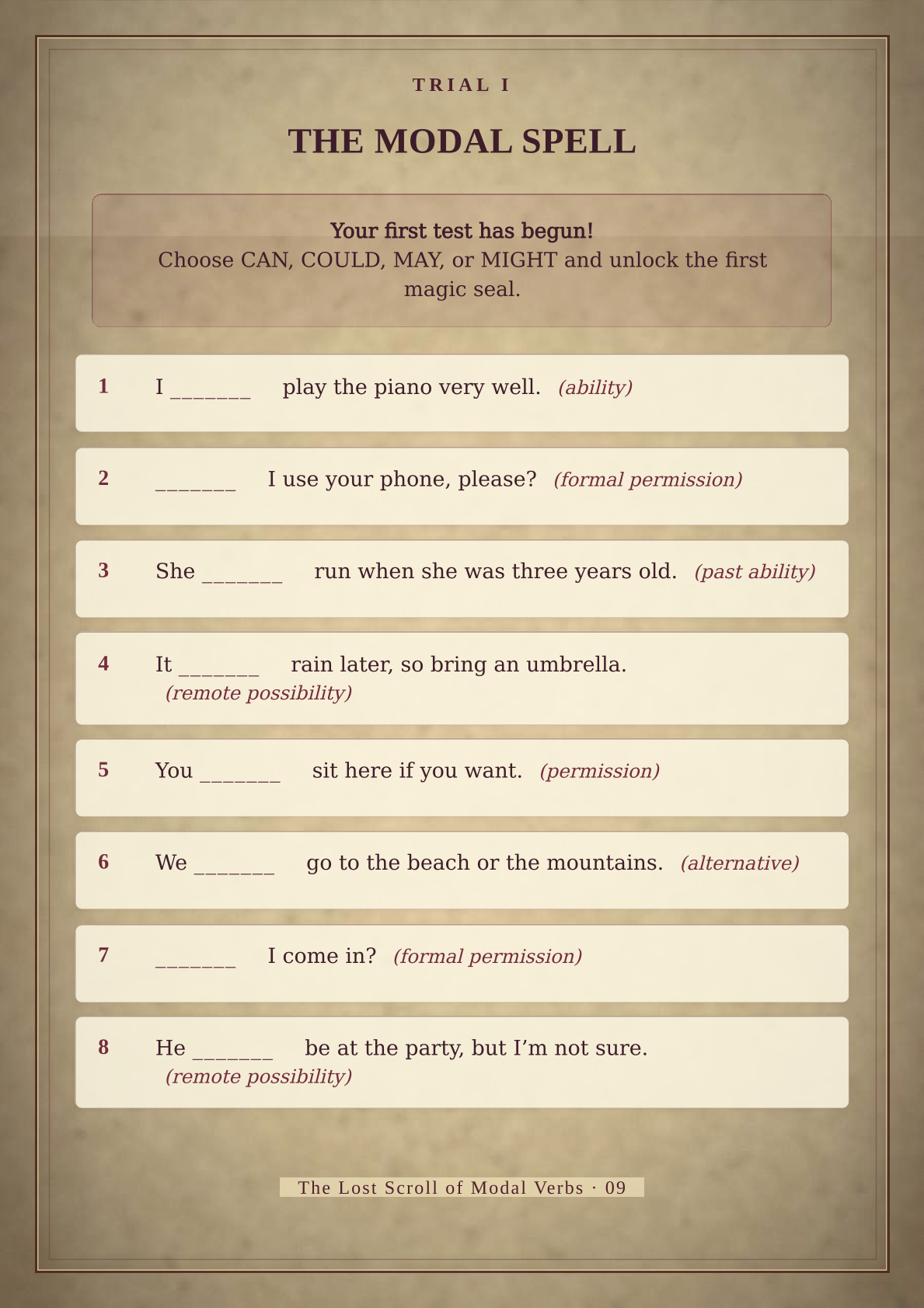
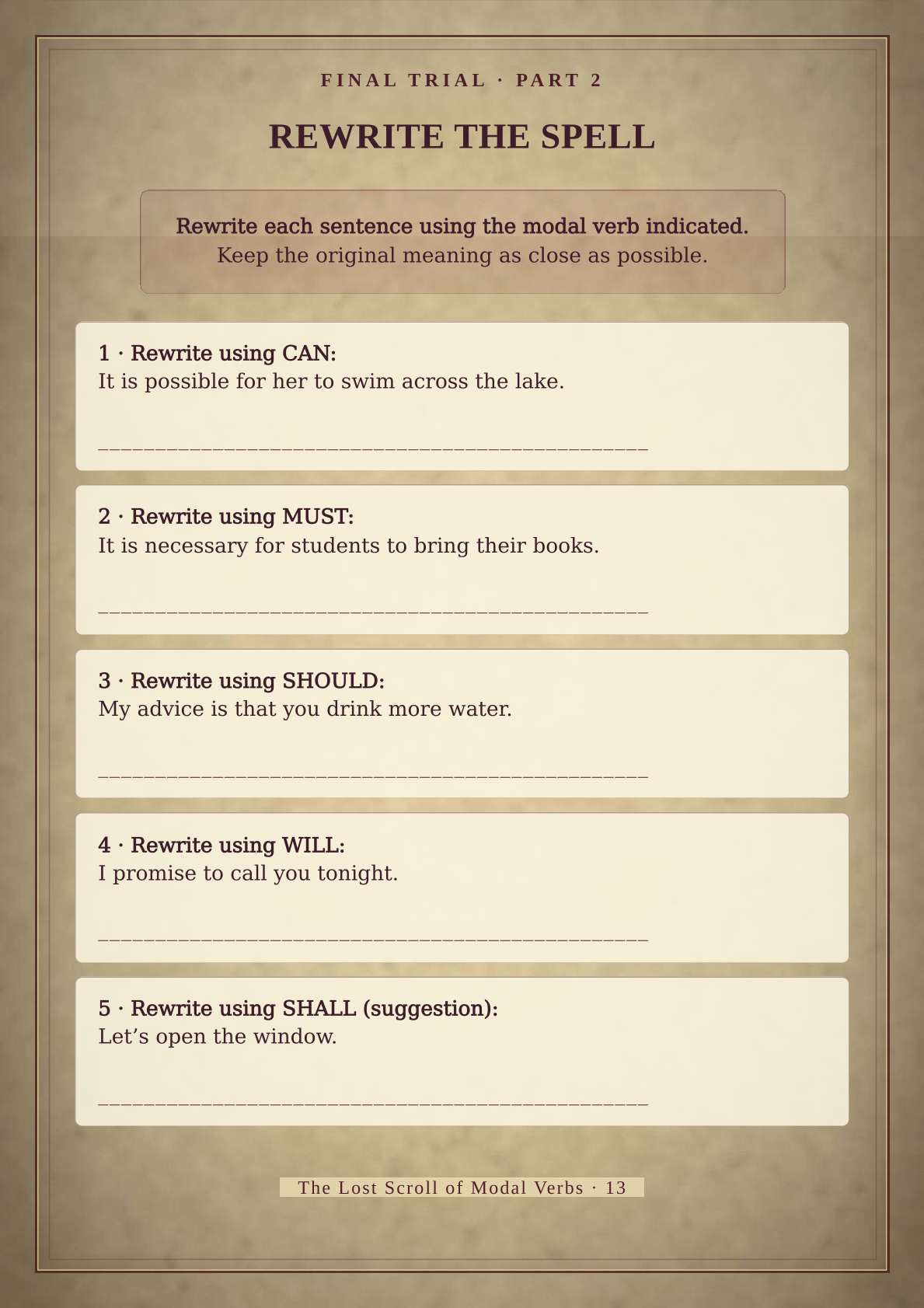
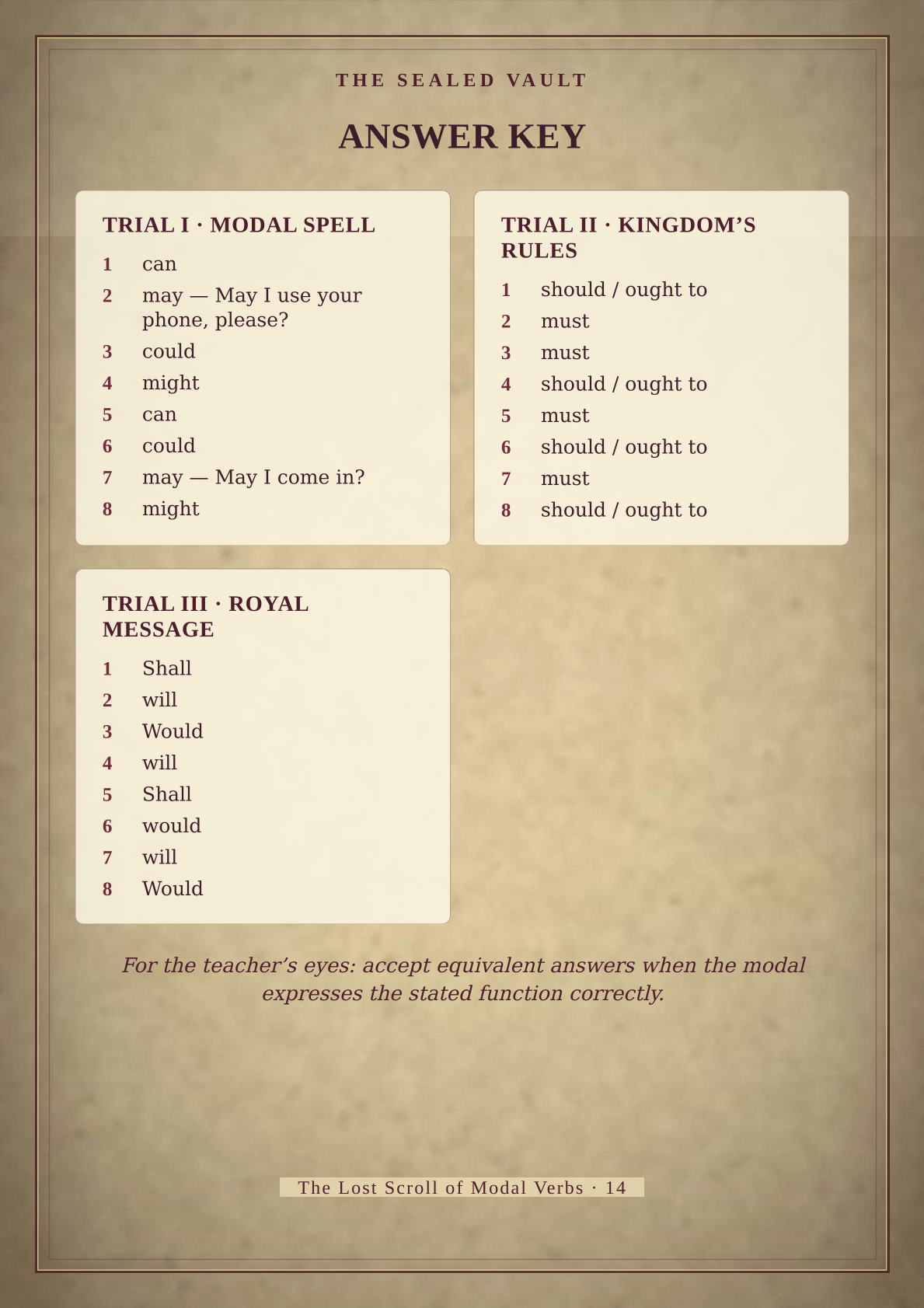
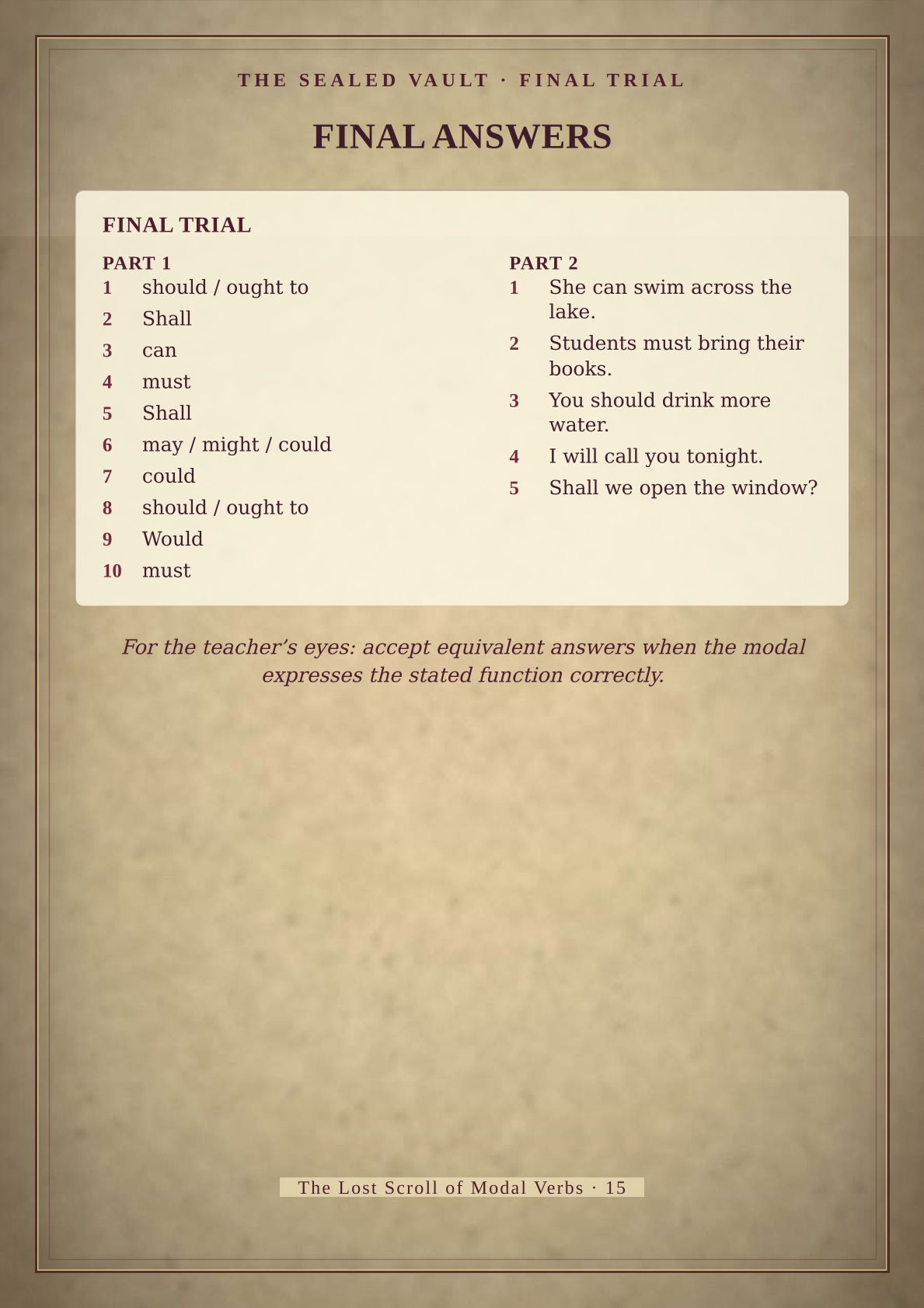
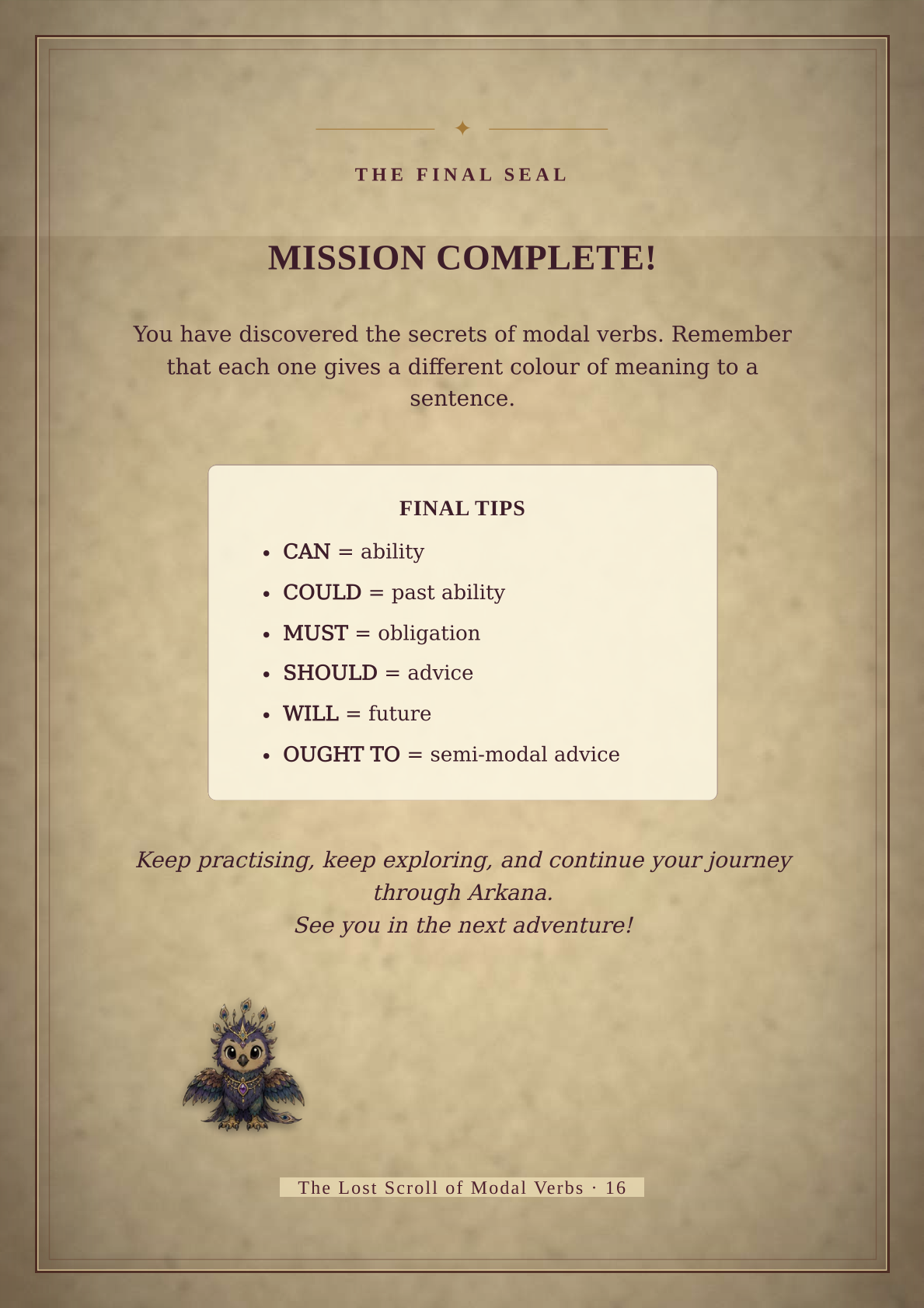
1. Can: Indicates ability or capacity, or a possibility/request.
Paul can swim. (Paul sabe/puede nadar.)
Can you pass me that spoon? (¿Me puedes pasar esa cuchara?)
2. Could: Past form of can. Also used to offer alternatives.
She couldn't come to the party because she was out of town. (No pudo venir...)
You could stay with us for a couple of weeks. (Te podrías quedar...)
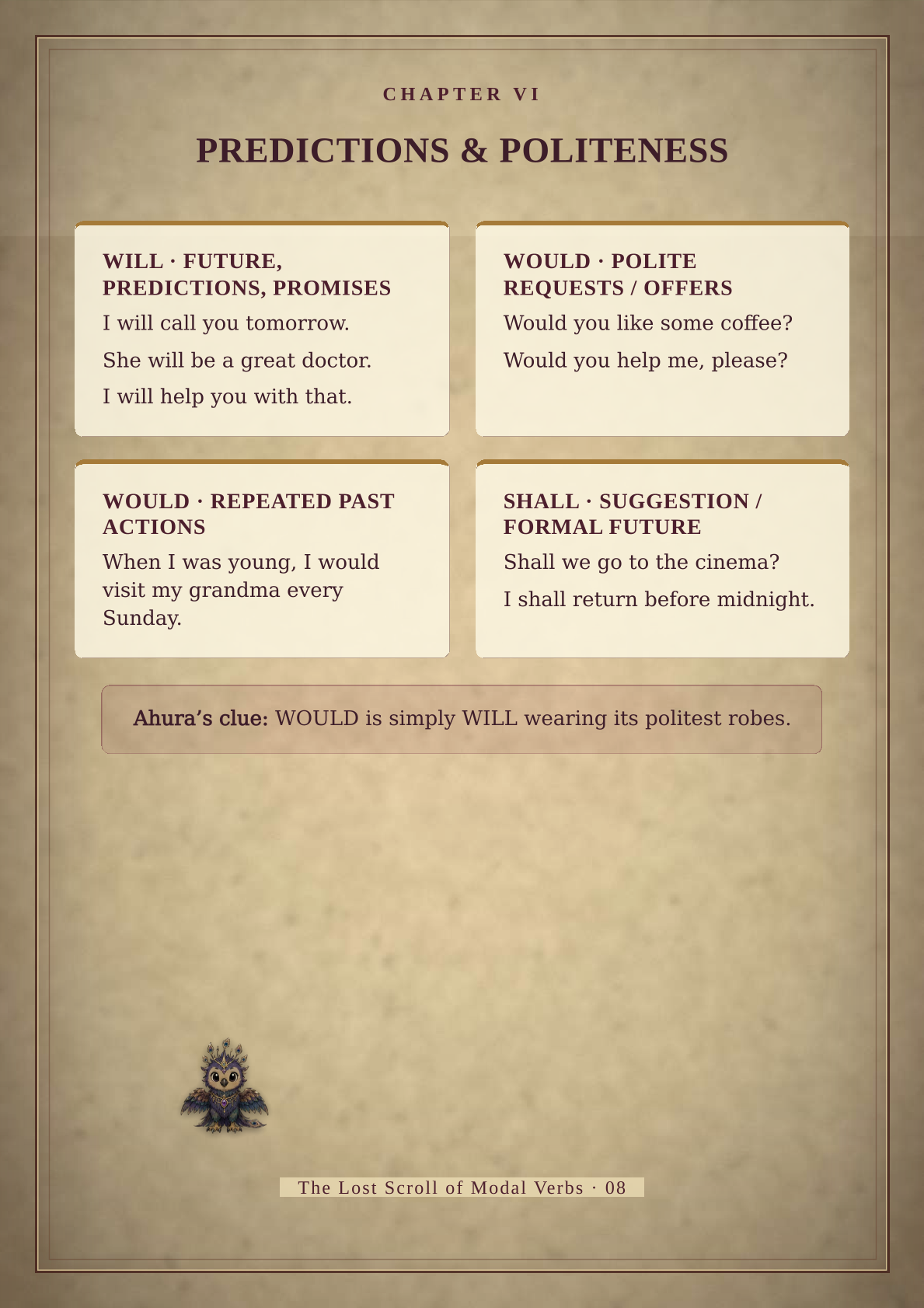
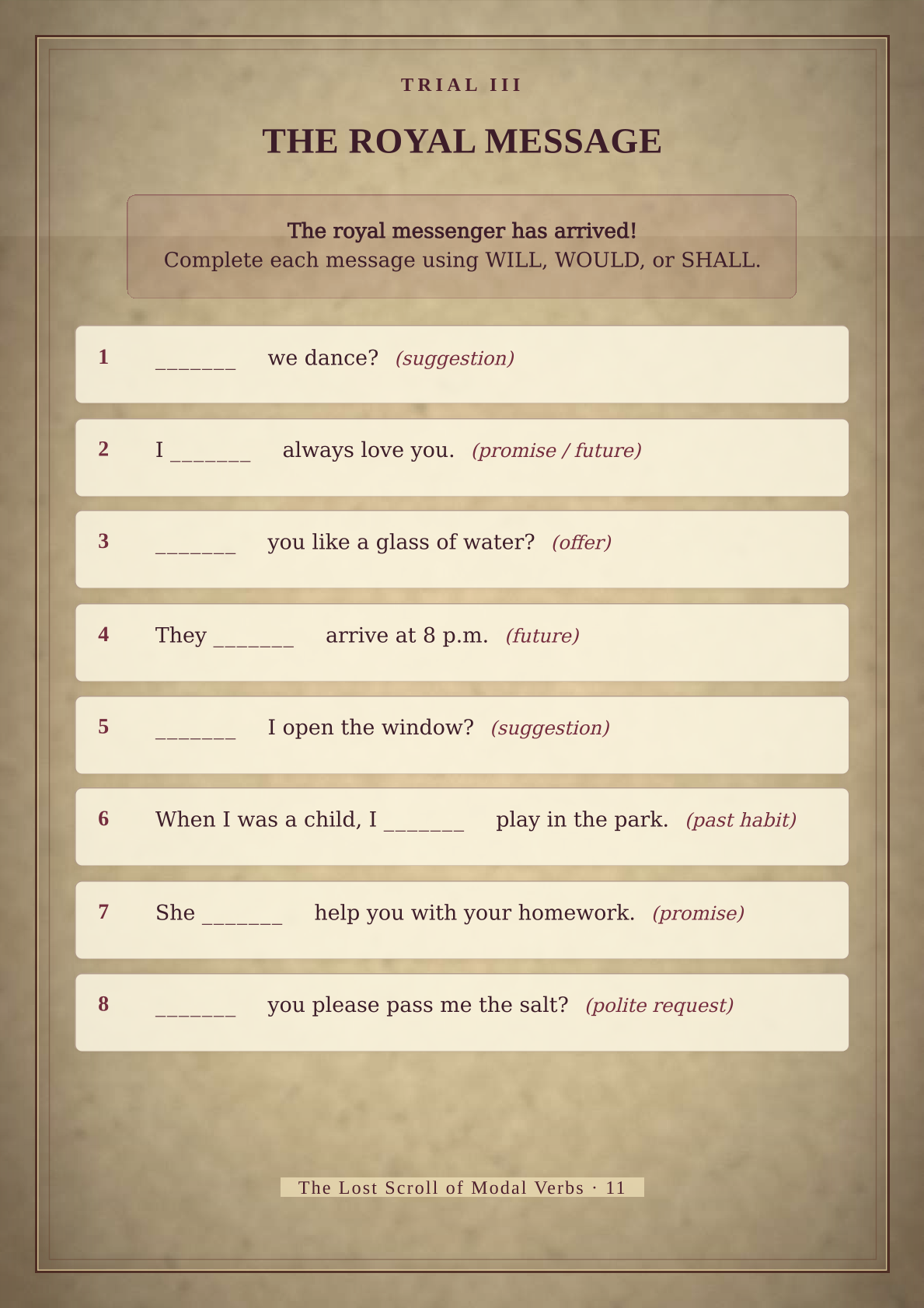
3. Will: Used to express future, make predictions, or state something is possible.
I'm sure she will call. Be patient! (Estoy seguro de que te llamará...)
4. Would: Used for polite requests/offers or constant past actions.
Would you like a cup of tea? (¿Quieres una taza de té?)
She would go to the cinema every Saturday. (Ella iba al cine...)
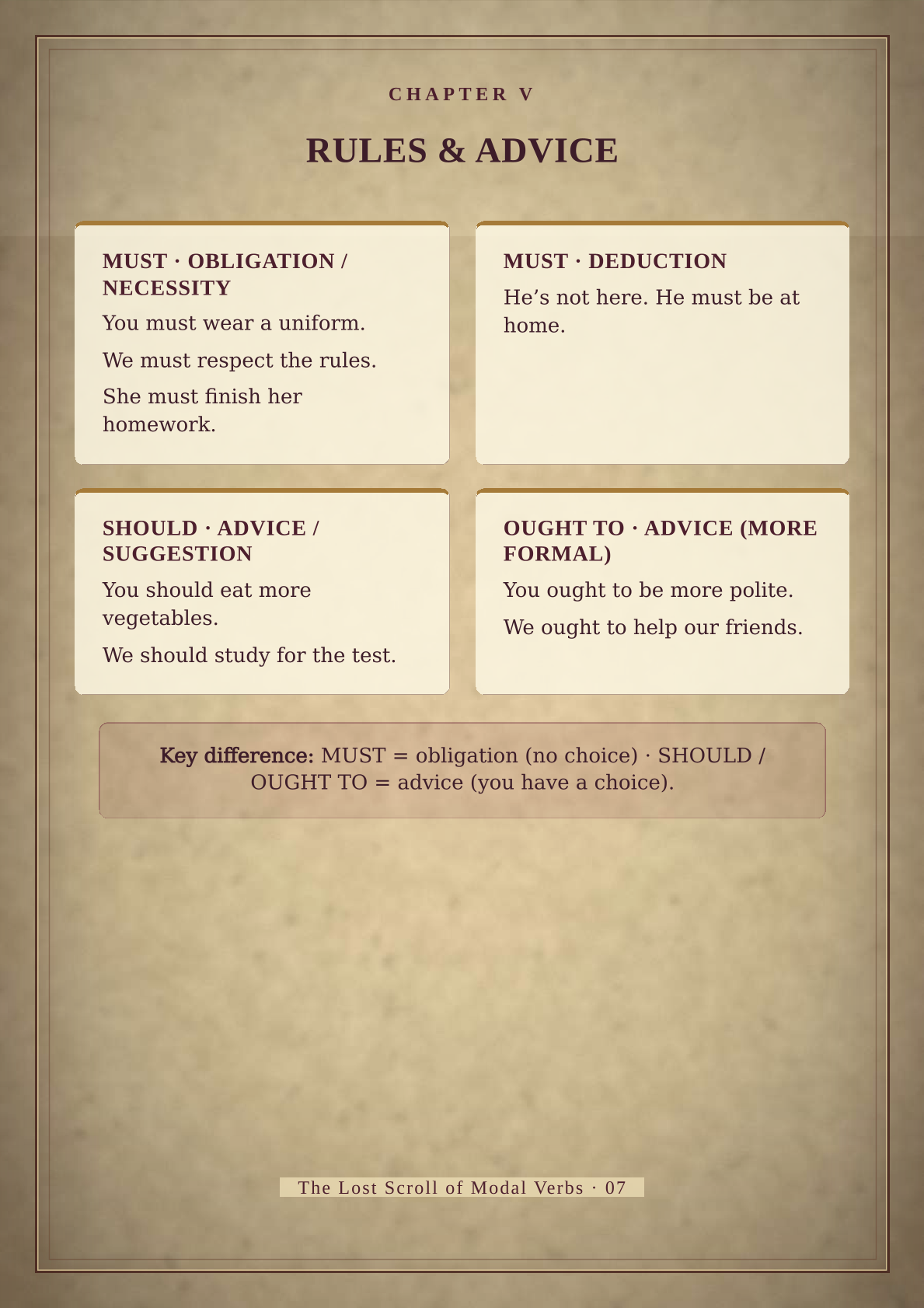
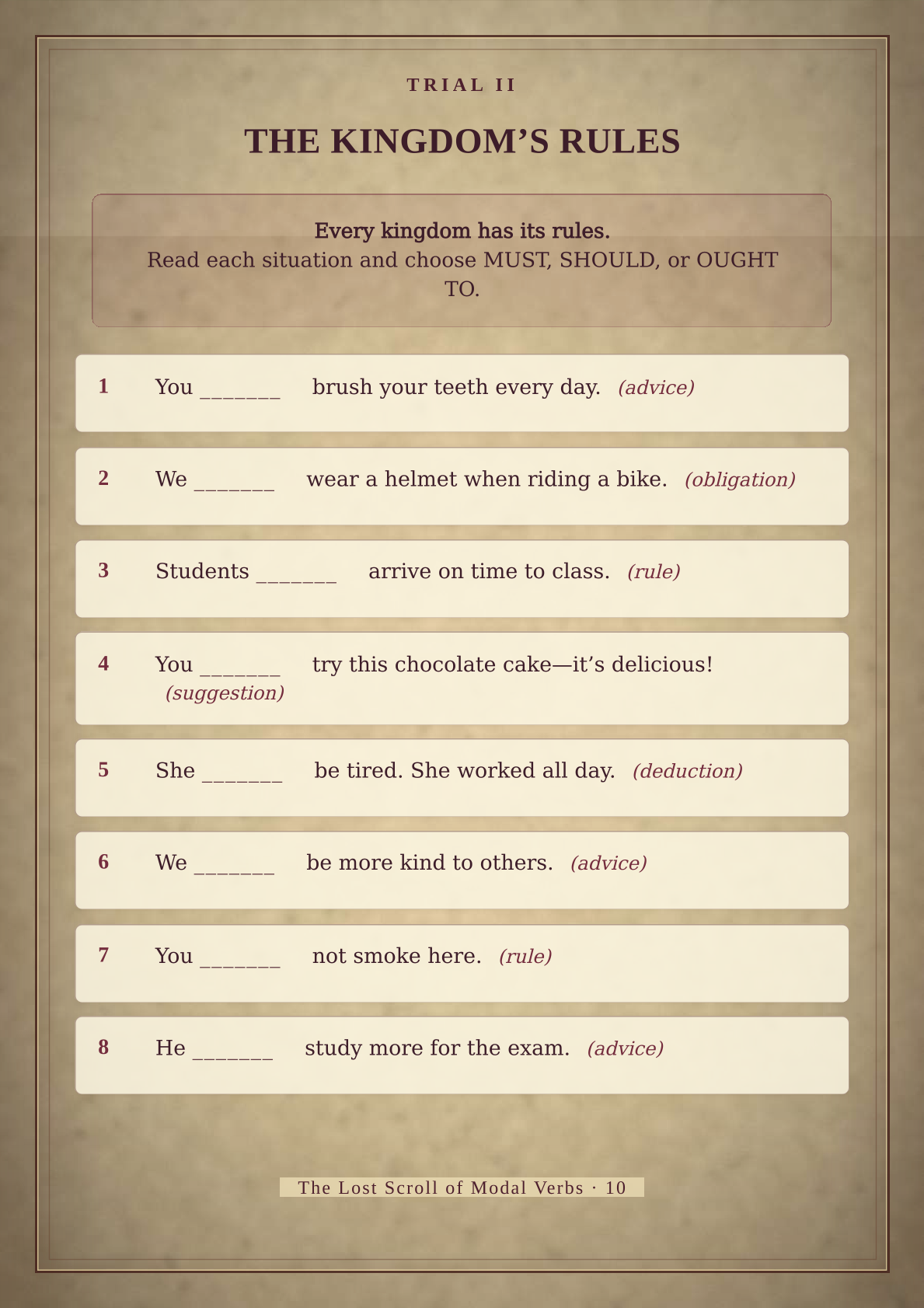
5. Must: Expresses necessity, commitment, or strong suggestion. Sometimes assumption.
We must follow the rules. (Tenemos que seguir las normas.)
Look, he's soaked! It must be raining cats and dogs. (Debe de estar lloviendo a mares.)
6. May: Similar to can but more formal. Used for polite permission or possibility.
May I come in? (¿Puedo entrar?)
She may come later. (Puede que ella venga más tarde.)
7. Might: Expresses suggestions, possibilities, requests, and offers.
My brother might come for the wedding. (Es posible que mi hermano venga...)
Might I help you? (¿Puedo ayudarte?)
8. Shall: Quite formal. Meaning equal to will. Also used for suggestions.
Shall we go? (¿Nos vamos?)
I shall be at your birthday party. (Estaré en tu fiesta...)
9. Should: Used to give advice, make or ask for suggestions and opinions.
He should eat healthier. (Debería comer más sano.)
We should not be here. (No deberíamos estar aquí.)
10. Ought to: Perhaps the least frequent. Similar meaning to should.
You ought to be more polite. (Deberías ser más educado.)
🎧 Audio Explanation
📖 Interactive Booklet